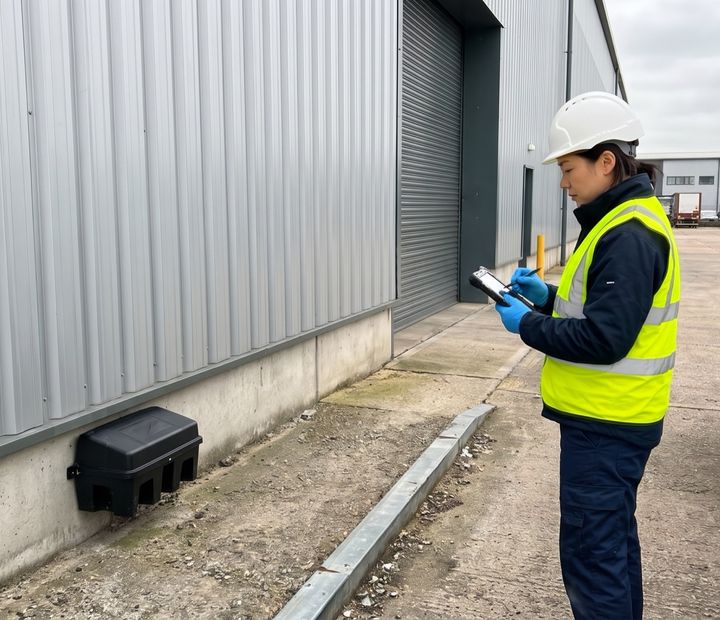
Northwest Environmental looks after pest control for businesses in Birchwood, including offices, warehouses and food outlets on Birchwood Park, shops around the shopping centre and local landlords. We survey the site, clear any live activity, then inspect on an agreed risk-based schedule with a written report after each visit. Phone or send the contact form to arrange a survey.
What makes Birchwood different for commercial pest control?
Commercial life in Birchwood centres on Birchwood Park, a 123-acre site in Risley where about 4,200 people work. The park counts 165 companies, in offices of all sizes, warehousing, industrial units and plots held for development. It also holds a hotel, a gym, a nursery and a range of food and drink outlets, including The EngineRooms. The park promotes itself as the heart of the UK nuclear industry, and several nuclear-sector firms are based there.
For pest control that mix is the defining feature. On the same park a food outlet may share a service road with a warehouse, a nursery and an office whose staff kitchen is used all day. Each needs its own plan, but none of them sits in isolation, because rats and mice travel between bin compounds, verges and loading bays without regard to whose lease covers what.
Where do pest problems usually start on a Birchwood site?
Warehouses and industrial units take goods in by road, and Birchwood’s position beside Junction 11 of the M62 suits distribution. Mice can arrive inside pallets and cartons, stored-product insects in food or feed, and roller doors left open through a shift let rodents walk in from the yard. Dock leveller pits and the space beneath racking are where activity often goes unnoticed.
Offices bring a different set of risks: staff kitchens, food deliveries, vending machines and floor voids carrying cables between desks, all of which suit mice once they are inside. Hotel rooms can pick up bed bugs carried in by guests, and kitchens anywhere on the park need the monitoring and records that food hygiene law expects. A nursery adds young children, which shapes product choice and visit timing.
Outside, the land itself plays a part. Birchwood was built on heath and mossland, Risley Moss lies alongside the town and the Liverpool to Manchester railway crosses it, so many perimeters back onto ground where rats find shelter.
What about shops, pubs and takeaways around the estates?
Birchwood Shopping Centre sits on Dewhurst Road, close to the railway station. Beyond it, each of the three residential districts has a pub, Gorse Covert has an Indian restaurant and takeaway and a local shop, and Oakwood has a convenience store with a post office. Premises like these rarely need the visit frequency of a food warehouse, but they still need a documented approach: a sightings log, lidded bins, door brushes that meet the floor and someone who owns the job. Our rat and mouse control work for small food businesses runs on the same reporting format as a larger contract.
How do landlords fit into commercial work here?
Birchwood’s housing came with the 1970s new town, with a mix of owner-occupied, council-rented and privately let homes. Warrington Borough Council bills landlords at its commercial rate whether a house is let or empty, so a landlord with a mouse problem or a wasp nest is, in practical terms, a commercial customer whichever provider they choose. We treat, point out the entry points and supply a dated report, which is useful at the start and end of a tenancy and when a repair is in question.
How does a Birchwood contract run?
The first step is a walk-round survey of the building and its surroundings. We look at where deliveries come in, where waste is stored, drain covers and door seals, and at the boundary: the railway corridor, rough ground, a shared bin compound or the unit next door. From that comes a written plan marking each monitoring point by number, listing the pests included, setting a visit frequency with the reasoning behind it and stating which work would be quoted on top.
If pests are already active, we clear them first with a short series of more frequent visits. After that, routine inspections follow the agreed schedule, with non-toxic monitoring wherever activity is low, a report at the end of each visit and a callout if staff see pests in between. Visits fit around site inductions, sign-in rules and trading hours, and once a year we review the trend with you. Birchwood lies within the Warrington borough we work from, so routine visits slot into regular rounds, and seasonal jobs such as wasp and hornet nest removal can be added to the same agreement.
Commercial Pest Control in Birchwood: what we see locally
- Birchwood Park puts about 165 businesses on one 123-acre site, mixing offices, warehouse and industrial units with a hotel, a gym, a nursery and food outlets, so one occupier's bin store or loading door can affect its neighbours.
- With M62 Junction 11 very close and the M6 at Junction 21 nearby, Birchwood warehouse space takes goods in by road, and inbound pallets and packaging are a common route in for mice and stored-product insects.
- The park and the estates were built on former heath and mossland beside Risley Moss, and the Liverpool to Manchester railway crosses the town, so rats have cover close to many site perimeters.
How we deal with it
- 1
Site survey
We walk the site inside and out: goods-in, waste areas, drains, doors and seals, roof line and voids, plus whatever sits beyond the fence, and we talk to the staff who see the site at night.
- 2
Written plan and agreement
You receive a site plan with numbered monitoring points, the pests covered, the visit frequency and why, what is included and what is quoted separately, and the term and notice period.
- 3
Clearing live activity
If pests are already active, we treat first with a short run of closer-spaced visits until activity stops, then move the site onto its routine schedule.
- 4
Routine inspections
Every monitoring point is checked and recorded. Where activity is low we rely on non-toxic monitoring and traps rather than keeping poison down for its own sake.
- 5
Reports and actions
Each visit ends with a report of findings, the actions we took and the actions for you, your landlord or facilities team, with proofing defects photographed.
- 6
Callouts and annual review
If staff see pests between visits, we arrange a callout under your agreement. Once a year we review trends with you and adjust the plan if the risk has changed.
Commercial Pest Control in Birchwood: frequently asked questions
Our unit is one of many on Birchwood Park. Who deals with pests in the shared areas?
Usually the lease decides. Inside your unit, and often its doors, seals and loading area, pest control is the occupier's job. Shared roads, verges, landscaping and communal bin compounds normally sit with whoever manages the estate. Pests ignore that line, so our surveys note anything we see on the boundary, such as burrows along a fence or an overflowing shared bin, and the report says who needs to act. That gives you something concrete to pass to the managing agent rather than a verbal complaint.
What paperwork do you supply before starting on a Birchwood Park site?
Before the first visit we can send a risk assessment and method statement for the work, safety data sheets for the products we expect to use, so you can update your COSHH records, and the competence certificates of the technicians who will attend. If your site runs a contractor approval process, a permit-to-work system or escorted access, send us the forms and we will complete them before the survey date rather than on the doorstep. Everything is then filed in your pest control folder.
I let a house in Birchwood. Will the council treat it at the residential rate?
Many councils run a pest control service for residents, but what is covered, who can book and the charges all vary and can change, so check the council's own pest control pages before you book. If you rent, report the problem to your landlord first. If you would rather book a private firm, call or message us to arrange a visit.
Are units near Risley Moss or the railway line more at risk from rats?
They have more cover nearby, but cover alone does not create an infestation. Rats move in when a site offers food and a way inside: an open skip, spilt waste by the compactor, a roller door that does not meet the floor, a gap around a pipe entry. Units backing onto rough ground or the railway corridor simply have less margin for error. We set external monitoring points along those boundaries, check them at every visit and treat early if activity appears.
How many visits a year does a commercial pest control contract need?
It depends on the risk at your site rather than a fixed package. Food manufacturers, busy kitchens and warehouses holding food or animal feed usually need more routine inspections than offices or dry storage, and many food sites have eight or more a year. Premises beside water, open land or waste operations, or with a recent infestation, may need more. Some audit standards and retailer codes set their own minimum. We set out the frequency and our reasons in the written plan and review it with you each year.
What is included in a contract, and what is quoted separately?
Before you sign, we put in writing which pests are covered, how many routine visits you get, what happens if you report activity between visits and what reporting you receive. Work that usually sits outside routine visits, such as proofing repairs, bird netting, clearing heavy fouling or treating a pest not named in the agreement, is quoted separately so nothing comes as a surprise. The term and notice period are written in as well. If anything is unclear, ask us before you commit.
What will an environmental health officer ask to see?
Expect to be asked how you control pests and to show the evidence. That usually means a site plan of monitoring points, a report from each visit, a record of any activity and what was done about it, proofing recommendations and whether they were completed, data sheets for products used and your contractor's details. Officers also look at the premises themselves: gaps, droppings, open food and waste. Good records do not excuse an infestation, but they show it is being managed, which counts towards confidence in management under the hygiene rating.
More in Birchwood
Last updated: