Northwest Environmental handles pest control across Lancashire for homes and businesses, including Preston, Chorley and Blackburn. We deal with rats, mice, wasps, bed bugs, cockroaches and nesting birds, plan each visit around your site and schedule it from our Warrington base. Call us or send the quote form with your postcode and the pest you have seen.
How do Lancashire’s waterways shape rat problems?
The Ribble gathers the Calder, Darwen, Douglas and Hodder on its way west to the Irish Sea, and the canals add long stretches of bank and towpath. The Leeds and Liverpool Canal crosses Blackburn from Feniscowles to Whitebirk, skirting the town centre east of the station, and it runs parallel to Chorley, where locks and marinas sit along the route. From Preston the Lancaster Canal heads north towards Kendal, and since 2002 the Ribble Link has joined it to the river. Brown rats swim well, burrow into soft banks and shelter in thick vegetation, so a garden, yard or loading bay that backs onto the water sits on a ready-made route.
Some of the water is out of sight. The River Blakewater runs in a culvert beneath Blackburn town centre, under Ainsworth Street and between the cathedral and the Boulevard, before it meets the Darwen. Culverts, old drains and sewer connections give rodents sheltered corridors under the streets, which is how a rat can appear in a shop basement or a terrace cellar with no open water nearby. Near a canal or a buried watercourse, our rat and mouse control survey takes in drain runs, inspection chambers and the boundary with the bank, not only the room where the droppings turned up.
Why do mill-town terraces keep getting mice?
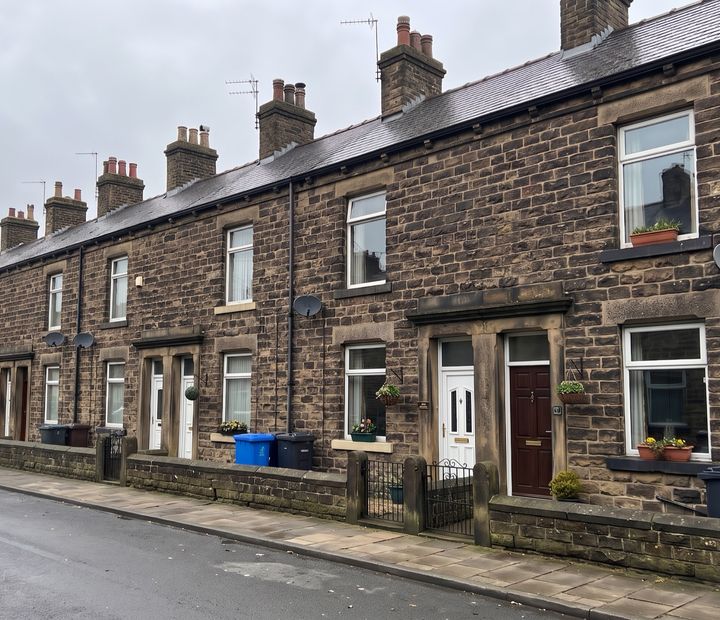
Much of Darwen was built between about 1850 and 1900, and its terraces still carry date stones, cellars and locally made brick and pipework. Chorley keeps its mill buildings and its streets of terraced houses built for mill workers, and Blackburn is another former mill town.
For mice, a row of Victorian terraces behaves like one long building. Gaps in party walls, worn mortar around old service pipes, suspended timber floors and damp cellars let a colony move along the row while each household deals only with its own kitchen. Lasting results come from treating the house and then proofing the routes: packing pipe entries with steel wool and mortar, fitting brush strips to cellar doors, and asking neighbours to do the same.
Old mills raise the same problem for businesses. Darwen’s India Mill, once the town’s leading textile building, is now home to several firms, among them an aircraft-parts maker and the TV Licensing operation. In a building with many tenants, one coordinated plan covering every unit and the shared areas works better than separate treatments that push rodents from one tenant to the next.
What changes on the new estates?
Buckshaw Village, between Chorley and Leyland, was built on the former Royal Ordnance Factory site as a mix of homes and industry, and its developer reported more than 3,000 homes and around 10,000 jobs there by 2022. West of Preston, more new estates are going up around Lea. New-build does not mean pest-free. Fresh landscaping gives rats cover, gaps around newly fitted service entries let mice in, and dry, unused roof voids suit a queen wasp starting a nest in spring. Groundworks next door can push rodents into finished houses, and homes beside industrial units can share their neighbours’ problem. Wasp and hornet nest removal on estates like these is busiest in late summer, when nests are at their largest and the workers most defensive.
Which business premises need the closest attention?
In Preston, the old Covered Market and Fishmarket were redeveloped in 2016 as the Market Hall and the Box Market, where traders sell fresh food and drink, and the main high streets, Fishergate and Friargate, are lined with shops, bars and restaurants. Blackburn’s market moved beneath the shopping centre in 2011 and sells Lancashire cheeses, tripe and Bowland beef and lamb. Premises like these draw mice, cockroaches and stored-product insects, and an environmental health officer will expect records of regular inspections, findings and the action taken.
Away from the centres the mix changes. South Rings Business Park at Bamber Bridge sits near the junction of the M6, M65 and M61; Riversway Retail Park lies off the A583 at Ashton-on-Ribble, near the redeveloped docks; and BAE Systems employs about 3,000 people at Samlesbury, part of the Lancashire Enterprise Zone. Royal Preston and Royal Blackburn hospitals and the university in Preston need visits timed around patients, students and staff. Our commercial pest control contracts for sites like these combine scheduled monitoring, bait-station plans and written reports, so the paperwork is ready when an inspector or auditor asks.
What do Lancashire’s councils treat, and what is changing?
Where we could check, pest control is run by the borough councils, and we found no county council service. Chorley and South Ribble now share one treat list. Chorley treats rats and mice in homes free and charges for wasps, fleas, cockroaches, ants and cluster flies; it gives only advice on bed bugs, has no out-of-hours cover and visits from Monday to Thursday. A 2018 cabinet review put the wait for an appointment at about two weeks, driven by demand for free rodent treatment. Hyndburn’s page says households pay nothing for rats and mice, though that page dates from 2016. We could not confirm the current terms in Preston or Blackburn with Darwen, so check your own council’s page.
In July 2026 the government announced plans to replace the county, district and unitary councils with four unitary authorities from 1 April 2028, subject to legislation, so council pest services may be reorganised. The Prevention of Damage by Pests Act 1949 requires each local authority to take steps to keep its district free of rats and mice as far as practicable, so that duty would pass to the new councils; what may change is how the service is delivered. For a pest your council does not treat, a business site or a visit fitted around your working week, call us.
How do we schedule Lancashire visits from Warrington?
Lancashire’s economy leans heavily on the M6, and so does our scheduling. The M6 links the county with our Warrington base, the M61 runs from Preston via Chorley, and the M65 joins the east Lancashire towns to Preston, so a technician can plan a canal-side terrace and a business-park unit into the same round. We confirm the visit window when you book. Businesses with premises over the border in Greater Manchester or Merseyside can keep one contact and one set of records across every site, and householders get the same planned approach as our commercial customers.
Towns we cover in Lancashire
Chorley & Leyland
Pest control for Chorley, Leyland and Buckshaw homes and businesses: canal-side rats, business park contracts and bird proofing, planned from Warrington.
Preston
Pest control in Preston for homes and businesses: terraces, student lets, docklands units, business parks and dairy farms, planned from Warrington.
Blackburn & Darwen
Pest control for homes and businesses in Blackburn and Darwen: canal-side rats, terrace mice, wasps and bird proofing, planned from our Warrington base.
What Chorley Council offers
Chorley Council treats rats and mice in homes free of charge and charges for wasps, fleas, cockroaches, ants and cluster flies. It gives advice and signposting only on bed bugs, has no out-of-hours service, takes reports online and makes visits from Monday to Thursday. South Ribble works from the same treat list. Hyndburn's page, dated 2016, says domestic rats and mice are free with a charge for other pests. We could not confirm current terms in Preston or Blackburn with Darwen and found no county council service, so check your own district's page before booking.
Council pest control page (checked 2026-10-24).
Our services in Lancashire
Rat & Mouse Control
The Leeds and Liverpool Canal through Blackburn and alongside Chorley, the culverted Blakewater under Blackburn's centre and cellared mill-era terraces give rats and mice water, cover and hidden routes between buildings.
Commercial Pest Control
Fresh-food stalls in Preston's Market Hall and Box Market and in Blackburn's market, the bars and restaurants of Fishergate and Friargate, and units at South Rings near the M6, M65 and M61 all need scheduled, recorded pest control.
Bed Bug Control
Chorley and South Ribble list bed bugs among the pests they do not treat, so households, landlords and accommodation providers there need a private inspection, treatment and follow-up visit.
Wasp & Hornet Nest Removal
Dry, unused roof voids on new estates such as Buckshaw Village and around Lea give queen wasps sheltered nesting sites, and Chorley charges for council wasp treatments.
Cockroach Treatment
Warm kitchens and food stalls in Preston's market halls, Blackburn's market under the shopping centre and older town-centre buildings suit cockroaches, which travel through shared ducts and service voids.
Other services available:
Local factors behind pest problems in Lancashire
- The Leeds and Liverpool Canal crosses Blackburn between Feniscowles and Whitebirk, skirting the town centre on the railway station's east side. [Wikipedia]
- Chorley lies alongside the Leeds and Liverpool Canal, with several locks and marinas nearby, Botany Bay Boatyard among them. [Wikipedia]
- The River Blakewater flows in a culvert beneath Blackburn town centre before joining the River Darwen, which in turn flows into the Ribble. [Wikipedia]
- The Calder, Darwen, Douglas and Hodder all feed the Ribble, which with the Lune and the Wyre is one of the county's three main rivers flowing west to the Irish Sea. [Wikipedia]
- The Lancaster Canal heads north from Preston to Kendal and has been connected to the River Ribble by the Ribble Link since July 2002. [Wikipedia]
- Much of Darwen dates from about 1850 to 1900, with date stones in its terraces, cellars and locally made brick and pipework among the clues. [Wikipedia]
- Buckshaw Village, built on the former Royal Ordnance Factory Chorley site, had more than 3,000 homes by 2022, according to its developer. [Wikipedia]
- Preston's Covered Market and Fishmarket were redeveloped in 2016 as the Market Hall and the Box Market, where traders sell fresh food and drink. [Wikipedia]
- Chorley Council identifies bird feeders as the most common thing drawing rats into gardens and recommends rodent-proof compost bins. [Chorley Council]
- A 2018 Chorley Council cabinet report noted waits of about two weeks for pest appointments, driven mainly by demand for free rodent treatment. [Chorley Council]
- In July 2026 the government announced plans, subject to legislation, to replace Lancashire's existing councils with four unitary authorities from 1 April 2028. [Wikipedia]
Pest control in Lancashire: frequently asked questions
Does my Lancashire council offer pest control?
It depends on your district. Chorley treats rats and mice in homes free, charges for insects such as wasps, fleas and ants, and gives only advice on bed bugs; South Ribble treats the same list. Hyndburn's page, dated 2016, says domestic rats and mice are free with a charge for other pests. We could not confirm the current terms in Preston or Blackburn with Darwen, and the planned 2028 reorganisation may change all of them, so check your council's site first. We cover the gaps, including business premises.
Do you cover Preston, Chorley and Blackburn, and the places around them?
Yes. Preston, Chorley and Leyland, and Blackburn and Darwen each have their own page on this site with local detail, and we also work in the surrounding areas, including Bamber Bridge, Buckshaw Village and South Rings Business Park near the M6, M61 and M65 junction. Book with your postcode and the pest you have seen, and we will confirm the visit window and which technician covers your area before we travel.
Why are rats common along Lancashire's canals and rivers?
Rats need water, cover and food, and the county's waterways supply the first two along long stretches of bank. The Leeds and Liverpool Canal passes through Blackburn and alongside Chorley, the Lancaster Canal heads north from Preston, and the Blakewater runs in a culvert under Blackburn's centre. Gardens and yards that back onto the water give rats an easy way in, especially where bird feeders or open compost bins add food; Chorley Council names bird feeders as the most common draw. We treat the infestation, then proof the boundary and check the drains.
My council will not treat bed bugs. Can you?
Yes. Chorley and South Ribble list bed bugs among the pests they do not treat, so households, landlords and accommodation providers in those boroughs need a private service. We inspect mattresses, bed frames, skirting and sockets to confirm the infestation, treat the affected rooms, and return for a follow-up visit to catch bugs that hatch from surviving eggs. Shared houses, including student lets, often need several rooms treated together, and a landlord can arrange that as one job rather than room by room.
My neighbours in the terrace have mice too. Should we treat together?
Usually, yes. Terraces of the mill-town era, such as the many in Darwen built between about 1850 and 1900, share party walls, cellars and old service runs, so a colony can move along the row while each house treats only its own kitchen. Treating one home tends to push mice next door and back again. We can treat several houses in the same visit window, seal shared entry points with materials mice cannot chew through, and give landlords with more than one house in a row a single plan.
Can a Lancashire council look after our business, or do we need a private contract?
Some councils do take on businesses. South Ribble sells annual and one-off contracts covering rats, mice and common insects, and Hyndburn's page offers commercial contracts after a survey. A private contract suits businesses whose needs go further: sites in more than one district or over the border in Greater Manchester or Merseyside, gulls or pigeons on the roof as well as rodents in the yard, or visits timed around shifts and deliveries. We survey each site, agree the visit frequency and keep reports ready for an environmental health officer or auditor.
Will the 2028 council changes affect pest control in Lancashire?
Possibly. In July 2026 the government set out plans to replace Lancashire's county, district and unitary councils with four unitary authorities from 1 April 2028, with elections due in May 2027, and the plan is still subject to legislation. Council pest services could be merged or redesigned, and treat lists may change. Our service does not depend on council boundaries, so homes and businesses keep the same contact and the same records whichever new authority they fall under.
Nearby areas we also cover
Last updated: