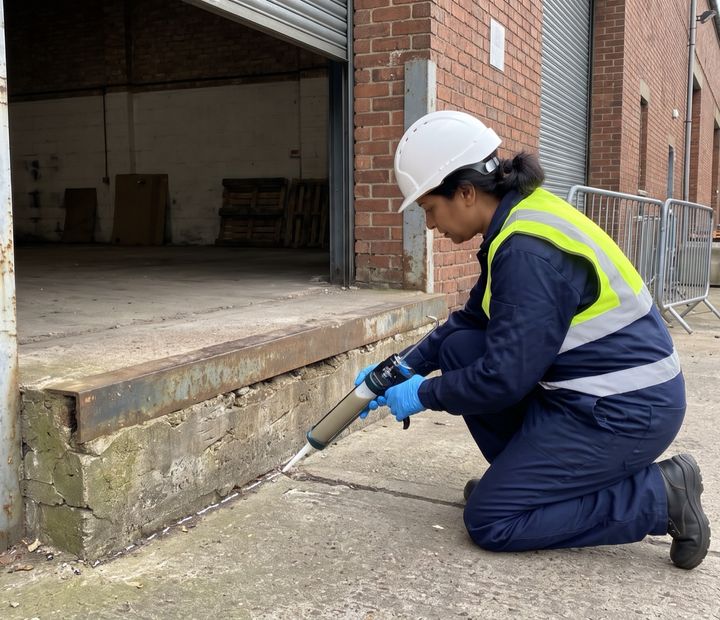
Northwest Environmental treats ants in homes and businesses across Cheshire, Merseyside, Lancashire and Greater Manchester, working out from Warrington. We identify the species, follow the trail to the nest, treat it with professional bait or targeted insecticide and show you which gaps to seal. Most garden ant problems need one visit. Call or use the enquiry form to book.
How can you tell you have an ant problem, not just a few strays?
One ant on the worktop is a scout. A line of them on the same route means a scout has found food and laid a scent trail back to the colony. That trail is our most useful clue, because it leads to the way in and, usually, towards the nest.
Signs worth noting before you call:
- a steady trail along a skirting board, worktop edge or the back of a sink, busiest on warm afternoons;
- ants appearing from the same point each day, often under a back door, where the floor meets the wall or around a pipe entry;
- small heaps of fine sand or soil pushed up between paving slabs or block paving, or at the foot of an outside wall;
- ants climbing roses and shrubs beside the house, where they collect honeydew from aphids;
- winged ants pouring out of the ground, or a gap indoors, on a warm, still summer day;
- tiny pale ants around a kettle or radiator in midwinter, which is a different and more serious problem.
Which ants are we likely to find?
From spring to early autumn, most of our ant work is with the black garden ant. Workers are dark brown to black and a few millimetres long. The colony lives outdoors in soil, under paving or against the foundations, with a single queen deep inside, and workers come indoors for food, especially sugar. They do not sting.
Red ants, usually Myrmica species, nest in lawns and borders and can sting, but rarely trail indoors. Yellow meadow ants build the domed mounds in older lawns and pasture and live almost entirely underground.
Pharaoh’s ants are the exception that matters. They are tiny, around two millimetres, pale yellow to light brown: a tropical species that in Britain survives only in heated buildings. They turn up in hospitals, care homes, blocks of flats with shared heating and large commercial kitchens, travelling through service ducts and pipe runs. A colony can have many queens and splits when disturbed, so it needs a completely different approach.
Why do ants get into buildings across the North West?
The region’s housing shapes where garden ants appear. On Warrington’s new-town and private estates, look first at any block-paved drive or patio laid on sand: the blocks warm in the sun, the sand is easy to dig, and the nest often runs right up to the house wall and back door. In the terraced streets of the Lancashire and Greater Manchester mill towns, flagged back yards and kitchens added onto the original house often leave joints at floor level where ants walk straight in.
Near the Sefton coast dunes south of Southport, gardens on light, sandy soil give garden ants easy digging in lawns, borders and under patios. On the Cheshire plain and in rural Lancashire, farmhouse kitchens, feed stores and stables draw ants to spilt feed. In older city housing, gaps around suspended timber floors and service pipes let ants travel inside the structure before surfacing in a kitchen.
Businesses see the same pattern at a larger scale: ants trailing in under dock doors at warehouses along the motorway corridors, foraging across staff kitchens in business-park offices, and nesting under the paving of canal-side beer gardens.
Garden ants become active as the ground warms in spring, numbers indoors peak in high summer, and winged queens and males fly on warm, calm days, mainly in July and August. Ants trailing indoors in midwinter usually mean a nest beside heating pipes or under a heated floor, or Pharaoh’s ants.
How do we deal with an ant infestation?
We start by identifying the ant, because the right treatment for garden ants can make a Pharaoh’s ant problem worse. Then we follow the trail to the entry point and, outside, to the nest: under a slab, along the base of the wall or beneath decking.
For black garden ants, treatment usually works on two fronts. A professional insecticide is applied where the ants get in and, where we can reach it, to the nest, as a targeted spray, dust or granule rather than a blanket treatment. Indoors, we place small amounts of gel bait in cracks and behind fittings along the trail. Workers carry the bait back and share it, which reaches the queen and the brood that a surface spray never touches.
For Pharaoh’s ants, we bait only. Spraying kills the foragers you can see and prompts the colony to split, spreading the problem to other flats, wards or rooms. A baiting programme covers the affected area and the rooms around it, with bait refreshed and activity mapped at each visit until feeding stops.
Before we leave, we show you which gaps need sealing and what to avoid while the bait works, above all spraying or wiping it away.
Is ant treatment safe for children, pets, livestock and staff?
The risk is low when it is carried out as described. Gel bait is used in tiny amounts in cracks, behind appliances and inside voids, out of reach of children and animals. Insecticide goes on entry points and nest sites outside, not across floors and worktops, and people and pets should stay off treated areas until they are dry.
Many ant insecticides are toxic to fish and bees, so we take care near ponds, fish tanks and flowering plants, and on farms we keep treatments away from feed, water troughs and bedding. In food premises nothing goes on food-contact surfaces and open food is covered or moved first. In care homes, hospitals and schools we plan around residents, patients and pupils.
How many visits does ant treatment take?
For black garden ants, one visit is usually enough. Bait takes a few days to work through a colony, so you may see more ants at first as they feed. If ants are still trailing indoors after about two weeks, we come back; a second colony or a nest under a floor is the usual reason. Pharaoh’s ants need a programme of several visits over weeks, sometimes months in a large building, because every colony has to be found and baited.
How do you keep ants out once they have gone?
Garden ants will always live in the garden, where they do little harm, but you can make the house far less rewarding:
- seal gaps under door thresholds, around pipes and cables, and where the floor meets the wall;
- keep sugar, honey, syrups, pet food and fruit in sealed containers, and wipe up spills straight away;
- empty kitchen bins often and rinse recycling before it goes out;
- deal with aphids on plants beside the house, since ants tend them for honeydew;
- re-point or re-sand gaps in paving next to the back door;
- on commercial sites, keep dock and fire doors shut when not in use and check door seals and brush strips.
When does DIY ant control stop being enough?
A short trail from the garden can often be handled with an amateur ant bait station, used as the label says and left alone. DIY tends to fail when people spray or scatter powder on the ants they can see: the foragers die, the colony carries on, and Pharaoh’s ants split and spread. Boiling water poured into a nest rarely reaches the queen and scalds the lawn.
Call us if ants keep returning to the same place despite baiting, if you cannot find where they come from, if you see ants indoors in winter, if they are tiny and pale, or if they are in a food business, a rented property or a building where vulnerable people live.
What should businesses, landlords and managing agents record?
Under the Food Safety Act 1990 and the food hygiene rules enforced through the Food Safety and Hygiene (England) Regulations 2013, food premises need adequate procedures to control pests, and ants trailing across a preparation area suggest something is not working. Note each sighting and treatment: the date, location, action taken, gaps sealed and whether activity stopped, filed with your food safety records.
In rented homes, a summer trail from the garden is usually the tenant’s to deal with, or is covered by the tenancy agreement. Responsibility can shift where the cause is structural, such as gaps in the exterior that a landlord must keep in repair under section 11 of the Landlord and Tenant Act 1985, or where an infestation is serious enough to be a hazard under the Housing Health and Safety Rating System or to make the home unfit under the Homes (Fitness for Human Habitation) Act 2018. Which applies depends on the facts. Pharaoh’s ants in a block of flats are usually a building-wide matter for the landlord or managing agent, since treating one flat pushes the colony next door.
How we deal with it
- 1
Identify the ant
We confirm whether it is a black garden ant, a red ant or an indoor species such as the Pharaoh's ant, because the right treatment for one can make another worse.
- 2
Follow the trail
Foragers are tracked back to where they enter and, where possible, to the nest itself: under slabs or block paving, along the base of a wall, beneath decking or inside a floor void.
- 3
Treat the colony
Gel bait goes into cracks along the indoor trail so workers carry it back to the queen, and targeted insecticide is applied at entry points and the nest outside. Pharaoh's ants are baited only.
- 4
Seal and advise
We show you the gaps around thresholds, pipes and floor edges that need sealing, and explain what to leave alone while the bait works, including not spraying over it.
- 5
Review and record
If ants are still trailing after about two weeks we come back to reassess. Businesses and landlords receive a written note of what was found, treated and recommended.
Typical visits: Black garden ants are usually dealt with in one visit, with a return if ants are still trailing indoors after about two weeks. Pharaoh's ants and other indoor species need a baiting programme of several visits over weeks or months, often across a whole building.
Safety: Gel bait is used in small amounts in cracks and voids out of reach of children and pets, and insecticide is applied to entry points and nest sites, not sprayed across rooms. Keep people and animals off treated areas until dry. Many of these products are toxic to fish and bees, so tell us about ponds, fish tanks and livestock feed nearby.
Ant Treatment: frequently asked questions
How do I get rid of ants in my kitchen for good?
Treat the colony, not just the trail. Wiping a trail with detergent clears the scent path for a while, but the nest, usually outside under paving or against the house wall, keeps sending workers. Bait placed on their route is carried back to the queen, and sealing the gap they use closes the way in. Remove the reward too: keep sugar and pet food in sealed containers, sweep up crumbs and empty the bin often. If ants are back within a few weeks, the nest has not been reached or there is a second colony, and that is the point where a professional visit is worth it.
Why do ants come back into the house every summer?
Because the colony never left. A black garden ant nest can last for years in the soil beside a house, and each spring, as the ground warms, the workers start foraging again and soon rediscover the easiest way in. A patio or drive laid on sand, a gap under the back door or the joint where an extension meets the original house gives them a short, sheltered route to the kitchen. Treating the nest and sealing that entry point breaks the cycle; killing the ants you see each year does not.
What is flying ant day, and do flying ants need treating?
Flying ants are a colony's new queens and males leaving the nest to mate. They fly on warm, calm days, mostly in July and August, though flights can start in June and run into September, spread across many days rather than one. They are harmless, they do not sting, and each swarm is over within hours. Close the windows, vacuum up any that get inside and let the rest go. Winged ants emerging from inside a wall, a floor or a kitchen unit are worth a call, though, because they mean a nest is inside the building.
Is ant treatment safe with children, cats and dogs?
The risk is low when it is done properly. Indoors we use gel bait in very small amounts, tucked into cracks, behind appliances and inside voids where hands and paws cannot reach it. Outdoors, insecticide goes on the nest and the entry points rather than across the lawn or patio, and we tell you how long to keep children and pets away, normally until the treated area has dried. Keep cats indoors during that time if they use the treated area. Let us know about ponds, fish tanks and anyone in the house with health conditions, and we plan the treatment around them.
What are the tiny yellow ants in our flat, even in winter?
They may be Pharaoh's ants, a tropical species that in Britain survives only in heated buildings. Workers are around two millimetres long and pale yellow to light brown, and they turn up around kitchens, bathrooms, radiators and pipe runs, often in several flats at once. Do not spray them: a colony has many queens and splits into new colonies when disturbed, which spreads the problem. They need a baiting programme across the affected flats and those around them, so tell your landlord or managing agent. Dark garden ants seen in winter often mean a nest near a heated floor or pipework.
Do ant sprays and ant powder work?
They kill the ants they touch, which is not the same as solving the problem. The workers out foraging are only a small part of a colony; the queen and brood stay safe in the nest and replace them. Spraying a trail can also scatter the ants and stop them taking bait, so never spray over bait that has been put down. Powder does more good puffed into a nest entrance outside than scattered across a kitchen floor, where it is a hazard to children and pets. With Pharaoh's ants, sprays make matters worse.
Is my landlord responsible for ants in a rented home?
It depends on the cause and on the tenancy. A seasonal trail of garden ants is usually treated as a housekeeping matter for the tenant, or handled as the tenancy agreement says. If ants are getting in through disrepair, such as a rotten door frame or failed render, the repair may fall to the landlord under section 11 of the Landlord and Tenant Act 1985. A serious, persistent infestation can also be assessed by the council as a hazard under the Housing Health and Safety Rating System. Pharaoh's ants in a block of flats usually need treating across the whole building, which the landlord or managing agent is best placed to arrange.
Will ants in our kitchen affect our food hygiene rating?
They can, if they suggest your pest control is not working. Food businesses must have adequate procedures to control pests, and an inspector who finds ants trailing across food areas will want to see that you noticed, acted and kept a record. A single forager by the back door on a hot day is very different from an established trail into the dry store. Report sightings straight away, cover or throw away anything affected and note what was done. We leave a written record of each treatment for your food safety file.
How long does ant treatment take to work?
The visit itself is usually short for a house. Gel bait then works over several days as workers feed on it and carry it back to the colony, so for the first day or two you may see more ants around the bait, not fewer. Leave them to it; that is the treatment working. Most garden ant problems tail off within a week or two. Pharaoh's ants take far longer, because every colony in the building has to be found and baited, so a programme can run for several weeks or months.
Ant Treatment by county and town
Last updated: