Northwest Environmental deals with pests at homes and businesses across Culcheth, including Newchurch, Glazebury and Croft. We treat rats, mice, wasps, hornets, squirrels, ants and fleas, and run scheduled monitoring for shops, schools and business units. Phone or send the contact form and we will agree a day for the visit, working from our Warrington base six miles away.
How did a demolished hall shape Culcheth’s housing?
Culcheth lies about six miles north-east of Warrington, on ground that belonged to historic Lancashire, and it is still mostly homes, arranged around a broad village green. A large share of those homes date from after the Second World War. Culcheth Hall, whose final owners were the Withingtons, came down in that period, and its land was built over as the Culcheth Hall estate.
Post-war estate houses tend to give pests a fairly predictable set of openings. Timber fascias shrink back from the brickwork, airbrick grilles crack, and the holes cut for later boilers, cables and extractor fans are rarely sealed well. A house mouse needs a gap little wider than a pencil, and a wasp queen choosing a site in spring is drawn to exactly the same sheltered crevices. That is why a visit on the estate usually starts with a slow walk around the outside walls and roofline rather than a bait box behind the fridge.
Newchurch tells a separate story. In 1903 the Salford Board of Guardians put up 24 cottage homes for children there, with a hospital and lodgings for staff. After closing in 1936 the buildings served as Newchurch Hospital, and in the mid-1990s they were converted into private houses, with the site made a Conservation Area. Buildings of that age often have chimneys, deep roof voids and old ventilation routes that rodents and insects can exploit, and changes to the outside of a home in a Conservation Area call for care, so we agree any mesh, brush strip or sealing with the owner before it goes in.
What do the mosses, Glaze Brook and the old railway mean for pests?
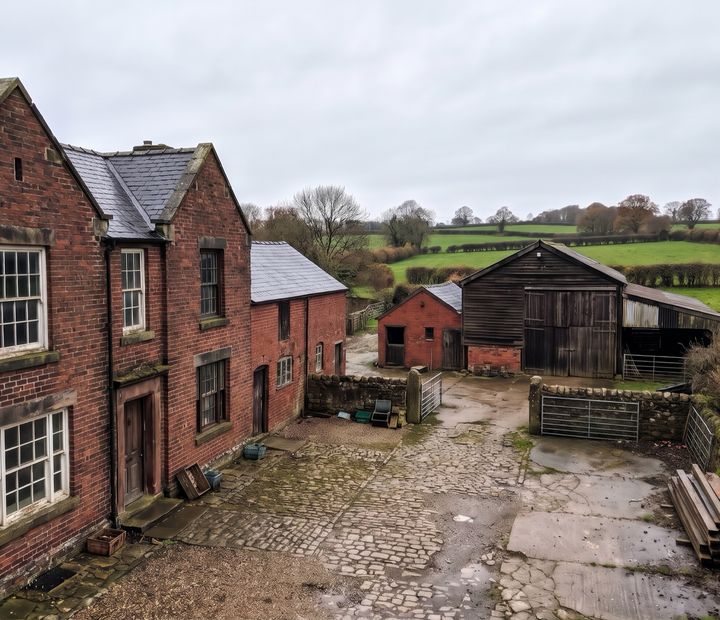
Beyond Culcheth and Glazebury the parish turns rural, and most of its listed buildings are farmhouses, farm cottages and barns. Glaze Brook marks the boundary on the Glazebury side, part of a 35-kilometre course through farmed lowland that ends in the Mersey stretch of the Ship Canal. Two surviving peat bogs sit close by: Holcroft Moss, the last uncut raised bog in Cheshire and cared for by Cheshire Wildlife Trust, and Risley Moss, a country park that the Domesday Book records as part of the Culcheth estate. Both were brought into a national nature reserve in 2025.
Inside the village, Culcheth Linear Park follows the route of the Wigan Junction Railways, which shut after the 1964 Beeching Report. The park’s headquarters sits on the footings of Culcheth’s former station, and the park now supports a range of wildlife alongside its community projects.
Taken together, this means open country reaches right to the back fences. Brown rats travel along brook banks, field margins and the overgrown edges of the old railway; wood mice and house mice look for shelter indoors once crops are cut and nights get colder; and European hornets, which like woodland and hollow trees, are more likely to turn up here than in a town centre. Close to protected mossland and running water we lean on trapping, proofing and enclosed bait stations, and we never leave loose rodenticide where wildlife or a watercourse could be affected.
Wasp season on the estate, the green and the farmyards
By August, colonies founded in spring are at full size and workers start hunting for sugar instead of insects. Around Culcheth that usually means nests in the eaves and roof spaces of estate houses, in garden sheds and old rodent holes in lawns, and in the barns and outbuildings dotted along the rural edge. Foragers then drift to picnics on the green, bins behind the village-centre shops and the golf clubhouse at Kenyon Hall. Our wasp and hornet nest removal treats the nest at its entrance, so there is no need to open up a roof or a barn wall, and we take extra care where horses, livestock or ponds are close by.
Rats and mice as the weather turns
Late October is when calls about scratching in lofts and droppings in kitchen cupboards pick up. Rodents that spent the summer in hedges, crops and along the old railway move towards warmth and food, and compost heaps, bird feeders, hen runs and decking near open ground make easy stepping stones. Farm buildings bring their own pressure, with feed stores and bedding that can support rats all year. Our rat and mouse control here follows the route in: we find where the animals are travelling and entering, block it, then treat with traps or tamper-resistant stations, and come back to check before the job is closed.
Housing may also change on the village edge. In November 2023 Story Homes applied to build 187 homes, with one to six bedrooms, on land at Warrington Road and Holcroft Lane that the 2014 Core Strategy held as green belt and that the revised Local Plan proposed to take out of it for housing. If the scheme proceeds, groundworks on open land tend to unsettle the rats and mice living in it, and neighbouring gardens can see more activity while work is under way.
Shops, schools and business units
Commercial life in Culcheth is village-sized but varied. The centre has two supermarkets and a run of smaller specialist shops, and the CPS shopping centre has been home to independent traders for more than half a century. Taylor Business Park houses small and medium-sized firms; Culcheth High School and three primary schools serve the village; and Kenyon Hall, a former country house that spent time as a school, now serves as a golf clubhouse. Larger employers sit next door at Birchwood, whose science and business parks employ around 5,000 people.
Each of these needs something slightly different from commercial pest control. Food retailers need regular monitoring and a written record an environmental health officer can follow. Schools need visits timed around lessons and holidays, with stations placed out of reach of pupils. Units on a business park often share bin stores and boundary hedges, so a problem next door soon becomes yours. We set the visit pattern to the site rather than to a fixed package.
What does Warrington Borough Council offer in Culcheth?
Many councils run a pest control service for residents, but what is covered, who can book and the charges all vary and can change, so check the council’s own pest control pages before you book. If you rent, report the problem to your landlord first. If you would rather book a private firm, call or message us to arrange a visit.
How do we schedule Culcheth visits from Warrington?
The village is a short drive from our Warrington base along Warrington Road, the A574, with Common Lane bringing traffic in from the north. We group work here with nearby Birchwood and the farms around the parish, so a householder on the estate and the manager of a unit on Taylor Business Park are each offered a set day, and any follow-up is booked before the technician leaves.
What Warrington Borough Council offers
Check the Warrington Borough Council website for current pest control services, who can book and what it charges, because these change. If you rent, ask your landlord who is responsible for treatment.
Council pest control page (checked 2026-10-24).
Our services in Culcheth
Wasp & Hornet Nest Removal in Culcheth
Estate gardens with sheds and fences, barns and farm cottages on the rural fringe and the hedges along the Linear Park give queens plenty of dry nest sites, and late-summer foragers drift to the green and the bins behind the village-centre shops.
Rat & Mouse Control in Culcheth
Farmland, the Glaze Brook lowland and the old railway corridor of the Linear Park bring cover for rats and mice right up to back fences, and cut fields and colder nights in autumn push them towards houses and outbuildings.
Squirrel Removal in Culcheth
Footpaths heading for Crow Wood and Windy Bank Wood and the trees along the Linear Park keep grey squirrels close to gardens, where a loose fascia or an overhanging branch can give them a route into a loft.
Commercial Pest Control in Culcheth
Two supermarkets, the independents in the CPS shopping centre, the firms on Taylor Business Park, the schools and the golf clubhouse at Kenyon Hall each need monitoring and written records scaled to the site.
Domestic Pest Control in Culcheth
For domestic pest control here we survey first, trace how pests are getting in and seal those routes as well as treating, so the problem does not simply come back.
Other services available in Culcheth:
Local factors behind pest problems in Culcheth
- Culcheth is a largely residential village set around a big village green, roughly six miles north-east of Warrington and historically part of Lancashire. [Wikipedia]
- Culcheth Hall, whose last owners were the Withington family, was pulled down after the Second World War and its land was used for the Culcheth Hall housing estate. [Wikipedia]
- The 24 children's cottage homes built at Newchurch in 1903 later served as Newchurch Hospital and were converted into private houses in the mid-1990s, when the site became a Conservation Area. [Wikipedia]
- Culcheth Linear Park follows part of the old Wigan Junction Railways, closed after the 1964 Beeching Report, and now supports a range of wildlife. [Wikipedia]
- Glaze Brook flows for about 35 km through mostly agricultural lowland before it meets the Manchester Ship Canal on the canal's Mersey stretch. [Wikipedia]
- Holcroft Moss, an 18-hectare lowland raised bog managed by Cheshire Wildlife Trust, is the last uncut raised bog in Cheshire and became part of a national nature reserve in 2025. [Wikipedia]
- Outside Culcheth and Glazebury villages the parish is rural, and most of its listed buildings are farmhouses, farm cottages and barns. [Wikipedia]
- Two supermarkets anchor the village centre alongside smaller specialist shops, and independent traders have occupied the CPS shopping centre for over 50 years. [Wikipedia]
- Taylor Business Park, also known as Taylor Industrial Estate, provides units for small and medium-sized firms on the road linking the village with Risley. [Wikipedia]
- Story Homes lodged plans in November 2023 for 187 homes of one to six bedrooms, 30% of them affordable, on land at Warrington Road and Holcroft Lane. [Story Homes]
Pest control in Culcheth: frequently asked questions
What does Warrington Borough Council offer for pest control in Culcheth?
Many councils run a pest control service for residents, but what is covered, who can book and the charges all vary and can change, so check the council's own pest control pages before you book. If you rent, report the problem to your landlord first. If you would rather book a private firm, call or message us to arrange a visit.
Do you cover Newchurch, Glazebury and Croft as well as the village itself?
Yes. We work across the WA3 postcode district around Culcheth, which includes the Culcheth Hall estate, the converted cottage homes at Newchurch, the village centre and the rural lanes beyond. Glazebury shares the civil parish with Culcheth, and Croft sits in the same Culcheth, Glazebury and Croft ward, so both are on the same visit rounds. Farmhouses and barns out towards Glaze Brook and the mosses are covered too, and Birchwood, next door, has its own page on this site.
Why do rats appear in gardens that back onto the Linear Park or open fields?
Both give rats what they need: thick cover, soft ground for burrows and a safe route to travel. The Linear Park follows the line of an old railway through the village, and the fields beyond the houses run on towards Glaze Brook and the mosses. A garden on that boundary, with a compost heap, a bird feeder or a gap under a shed, is the first stop. We trace where the rats are coming through the fence line, treat with secured stations or traps, and advise on clearing harbourage and proofing the shed or decking.
Why do mice get into houses on the Culcheth Hall estate in autumn?
As nights cool and the fields around the village are harvested, house mice and wood mice go looking for warmth and food. Houses built after the war on the Culcheth Hall estate are now old enough for small gaps to open around fascias, airbricks and the holes cut for newer pipes and cables, and a mouse needs very little space. We find the entry points first, then treat with traps or secured bait stations, and seal the gaps with materials mice cannot chew through, such as wire wool, mesh and mortar.
Will the planned homes off Warrington Road and Holcroft Lane bring more pests?
Nobody can say for certain, and the 187-home application Story Homes submitted in November 2023 is a proposal rather than a finished estate. In general, though, when open land is stripped and dug for building, rats and mice living in field margins and hedges are displaced, and some move into the nearest gardens and outbuildings. If work does start nearby, keep bins lidded, clear spilled feed under bird tables and check the base of sheds and decking. If you see burrows or droppings, an early visit is easier than a settled infestation.
Can you look after shops in the village centre and units on Taylor Business Park?
Yes. The two supermarkets, the independents in the CPS shopping centre and the firms on Taylor Business Park all handle food, stock or packaging that pests go for. We set up a schedule of monitoring visits suited to each site, with bait stations and insect monitors placed where they will do some good, and leave a written report after every visit showing what we found and what we advise. Food businesses must have adequate pest control procedures, and those reports are the evidence an environmental health officer will ask to see.
Are grey squirrels a problem in lofts near the woods around Culcheth?
They can be. Footpaths from the village run towards Crow Wood and Windy Bank Wood, and the trees along the Linear Park give squirrels a way into gardens, from where a loose fascia, a gap at the roof edge or an overhanging branch lets them into a loft. Once inside they chew timber, insulation and sometimes wiring. Grey squirrels are an invasive species, and the law does not allow one that has been caught to be released, so we combine humane control with proofing the entry point once the loft is clear.
Nearby areas we also cover
Sources (8)
Last updated: