Northwest Environmental treats rats, mice, birds, wasps, bed bugs and other pests for homes and businesses across the borough of Wigan, including Standish, Pemberton and Hindley. Technicians drive up from our Warrington base on a day agreed with you, survey first, then treat and proof. Phone the office or send an enquiry through the website to arrange it.
Who can still use Wigan Council for pests?
Wigan Council still runs a pest service, but only for people living in its own houses. Those tenants book online with their rent reference and pay nothing extra, since it comes out of their rent, as long as they can prove the tenancy when the technician calls; otherwise a charge applies. Help covers insects and vermin, and tenants are pointed to advice on bed bugs, wasps and bees.
Everyone else is outside it. Owner-occupiers, private tenants and landlords have been dropped from it, so a homeowner in Standish with rats under the patio, a landlord with mice in a rented terrace or a couple in a converted mill flat has no council appointment to wait for. The booking page is undated and makes no mention of business premises, so firms should not count on a council visit either. That is the gap we fill across the borough: private visits for homes and premises, booked directly with us.
Private renters should also put the problem to their landlord in writing, because defects that let pests in, such as broken drains or open airbricks, are usually theirs to repair.
Why does so much pest pressure here come from the water?
Three kinds of water run through Wigan, and each changes the job.
The Leeds and Liverpool Canal had reached the town from Liverpool by 1781. It climbs a flight of 21 locks east of the Leigh Branch junction, and the branch has a pair of its own at Poolstock. At Wigan Pier the water now carries only leisure boats and anglers. Soft banks, lock-side vegetation and the bread, bait and takeaway scraps left along the towpath suit brown rats well, and gardens that meet the towpath tend to receive rats from the bank rather than from the street.
The River Douglas behaves differently. Near Wigan North Western it runs for some distance through a culvert beneath the railway, and sewage discharge along much of its course is one reason its water quality is rated below good. Rats live and breed in sewers and travel along culverts, so in properties near the river we lift inspection chambers and check drain runs before any bait goes down.
Then there are the flashes. Wigan sat on a heavily worked coalfield, with an estimated thousand pit shafts within five miles of the centre, and where the ground sank over old workings it filled with water. The Wigan Flashes, formed by subsidence from around 1902 and covering about 738 hectares, became part of a National Nature Reserve in 2022, and Pennington Flash, in its country park between Lowton and Leigh, has a bird list of over 230 species. Next to a reserve, a poisoned rat is a risk to whatever eats it, so on these edges we rely on enclosed traps and locked stations, search for carcasses on every visit and never leave bait where wildlife can reach it.
Terraces, tower blocks and mill flats: how do pests move between homes?
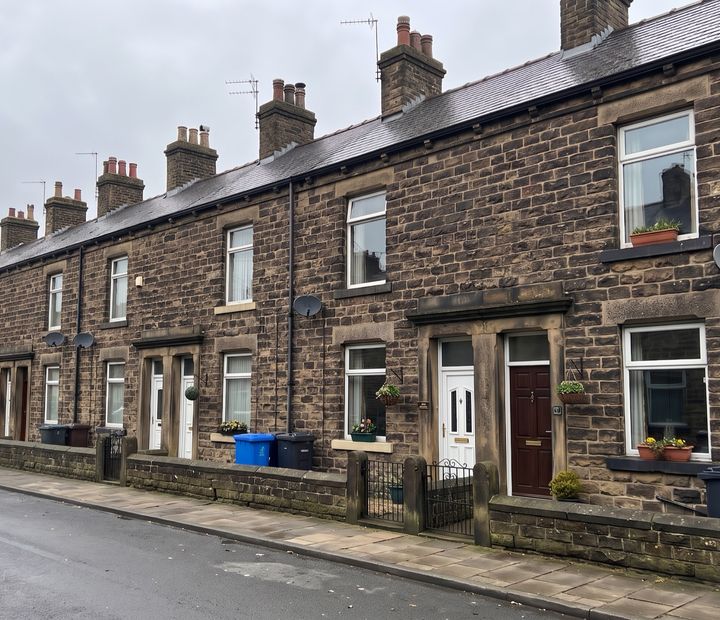
In Leigh, the borough’s second town, Victorian and Edwardian terraces still crowd around the centre. In rows like these a mouse problem seldom belongs to one house: mice use linked lofts, the voids under floorboards and gaps where pipes cross party walls. Treating one home while next door does nothing usually means a return visit, so we will talk to neighbours, landlords or letting agents to deal with the row together. Our Leigh page covers that town in more detail.
East of the centre, across the Douglas from the shops, Scholes is known for its council estate and tower blocks. In any high-rise, pests move up and down through service risers, ducts and refuse areas, and bed bugs and cockroaches can pass from flat to flat. Council tenants there use the council’s own service; anyone else living in a block needs a plan that takes in the shared spaces as well as the flat.
Wigan’s cotton mills spread into the town through the 1800s, and some of that legacy is now housing. Trencherfield Mill, facing Wigan Pier, became apartments in 2009. Conversions of this kind tend to have thick walls, boxed-in services and long corridors that give mice hidden routes between flats, and deep window reveals outside that pigeons like. The redevelopment approved for the pier site in 2019, with new homes, a food hall and event spaces, would add to that mix, and groundworks of any size tend to push rats into neighbouring buildings.
Which business premises in Wigan carry the most pest risk?
Heinz’s 55-acre Wigan factory is said to be Europe’s biggest food processing plant, and every business here that makes, stores or serves food, from a plant of that size to a café, works under the same food hygiene law. Inspectors expect to see pest records. So our commercial work centres on the paper trail: a plan of every monitoring point, written findings from each visit and proofing advice that can be signed off once done.
Elsewhere the risk comes from footfall and roof space. The Grand Arcade, opened in 2007, and The Galleries, with its indoor market, put many traders under one roof, and in any shopping centre one unit’s bins can feed rats for the whole block, so a tenant’s records need to sit alongside the centre’s. The stadium that is home ground to both Wigan Athletic and Wigan Warriors, with the Robin Park arena next door, holds crowds of over 25,000, and venues of that size generate the food stalls and litter that gulls and rodents both exploit. On business parks such as Westwood Park, built on the old power station site, we check roofs as closely as yards, because the large flat roofs common on industrial units are where gulls choose to nest, and that is where bird proofing does much of its work.
How do visits to Wigan fit around our Warrington base?
Warrington is roughly ten miles to the south, and Wigan stands where the A49 and A577 meet, with both roads connecting to the M6, M61 and M58. That puts the whole borough within easy reach, from the town-centre shops to the homes around the country park at Haigh Hall, and across the postcode boundary to the WN4 and WN5 addresses that fall under St Helens.
Every booking is given a set day rather than a vague window. The technician agrees return dates with you before leaving the first visit, and commercial sites are put on a standing rota so monitoring stays on schedule. Homes and businesses come through the same team and the same diary, so a shop with mice in its stockroom and a family with wasps in the loft are booked the same way and get the same written follow-up.
What Wigan Council offers
Wigan Council's pest service now covers only people living in Wigan Council houses; homeowners, private tenants and landlords are no longer served. Tenants book online with their rent reference number, and the cost is covered by their rent as long as they can show proof of tenancy at the visit; without it, the treatment is charged. The booking page deals with insects and vermin, gives guidance on bed bugs, wasps and bees, and links to a list of pests the council does not treat. The page is undated and says nothing about business premises, so firms should ask the council directly about any commercial service.
Council pest control page (checked 2026-10-24).
Our services in Wigan
Rat & Mouse Control in Wigan
The canal's lock flight, the culverted River Douglas and the edges of the subsidence flashes are the kinds of bankside and sewer-linked corridors rats use to reach gardens and older drains. With the council treating only its own tenants, private homes and businesses arrange rodent work themselves.
Bird Control & Proofing in Wigan
Canal-side mills and warehouses around Wigan Pier, business park roofs such as those at Westwood Park and a town holding 125 listed buildings mean pigeon and gull proofing here is often heritage or height work that needs planning.
Commercial Pest Control in Wigan
Food manufacturing on the scale of the 55-acre Heinz site, two town-centre shopping centres with an indoor market and a stadium holding over 25,000 make written pest records part of normal compliance for businesses across the borough.
Domestic Pest Control in Wigan
Since Wigan Council stopped treating for owner-occupiers, private tenants and landlords, every household outside council housing needs its own route to a technician for mice, fleas, ants and other household pests.
Bed Bug Control in Wigan
Tower blocks, converted mills and close-set terraced rows let bed bugs pass between neighbouring homes through shared walls and service runs. The council's bed bug guidance is for its own tenants, so any other household needs a private plan that takes in the rooms around it.
Wasp & Hornet Nest Removal in Wigan
The council's wasp help is for its own tenants only, so homeowners, landlords and businesses with a nest in a terrace loft, a garden wall, a shed or a shop's eaves book a private treatment.
Other services available in Wigan:
Local factors behind pest problems in Wigan
- The Leeds and Liverpool Canal had been cut through to Wigan from Liverpool by 1781, and the town's main flight of 21 locks rises east of the junction with the Leigh Branch. [Wikipedia]
- In Wigan the River Douglas passes through a long culvert beneath the railway close to Wigan North Western station, and sewage discharges are one reason its water quality falls short of good. [Wikipedia]
- The Wigan Flashes, about 738 hectares of lakes and wetland created by mining subsidence in the early 1900s, became part of a National Nature Reserve in 2022. [Wikipedia]
- Scholes sits just east of the town centre, on the far side of the River Douglas from the shops, and is known for its council estate and tower blocks. [Wikipedia]
- Trencherfield Mill, once a cotton mill and facing Wigan Pier across the road, has been apartments since 2009. [Wikipedia]
- Plans to remake Wigan Pier as a mixed scheme of housing, a food hall and venues for events gained approval in 2019, and the council said in 2025 that it would hold events there during the rebuilding. [Wikipedia]
- Heinz operates a 55-acre food factory in Wigan, said to be Europe's biggest food processing plant. [Wikipedia]
- Westwood Park business park stands on the site of the former Westwood power station. [Wikipedia]
- Town-centre shopping includes the Grand Arcade, opened in March 2007, and The Galleries, which combines shops with an indoor market. [Wikipedia]
- Closely packed Victorian and Edwardian terraced streets surround Leigh town centre. [Wikipedia]
Pest control in Wigan: frequently asked questions
Can Wigan Council treat pests at my home or business?
Only if you rent your home from Wigan Council. For those tenants the cost is built into the rent: they book online with their rent reference number and need proof of tenancy at the appointment, or the visit is charged. Insect and vermin problems are dealt with, and there is advice for tenants on bed bugs, wasps and bees. Homeowners, private renters and landlords are no longer served. The page makes no mention of business premises, so a firm should ask the council directly or use a private contractor.
Are Standish, Hindley and Ashton-in-Makerfield included in your Wigan coverage?
Yes. If you are unsure, give us your postcode when you enquire and we will confirm. Leigh has its own page on this site.
We live on the greener edge of the borough. Are the pests different there?
Often, yes. Homes beside open green space, such as the country park around Haigh Hall, the Borsdane Wood nature reserve or the far south of the borough, where the Liverpool to Manchester railway crosses Chat Moss, see a different mix from the town centre. Wood mice come indoors as autumn sets in, rats gather around hen runs, compost and stored feed, grey squirrels get into lofts and wasps nest in sheds and outbuildings in late summer. Stables, smallholdings and small rural businesses get the same survey-led approach as a house, with yards and feed stores included.
We trade from a unit or market stall in a Wigan shopping centre. Does pest control fall to us or to the centre's management?
Usually both, and your lease sets out the split. In most shopping centres, management looks after common areas, service corridors and shared bin stores, while each tenant answers for its own unit. A food business keeps its legal duty to control pests whatever the lease says. Rodents and insects rarely stay in one unit, so we can work alongside the centre's own contractor and share findings where you agree, while keeping your records separate so an environmental health officer or your landlord can see exactly what was done in your space.
We live near the Wigan Flashes. Does that change how rats are treated?
It does. The Flashes are part of a National Nature Reserve, and Pennington Flash near Leigh has a bird list running past 230 species, so wildlife that eats rodents is never far away. Rodenticide in the wrong place can poison an owl or a fox that catches a weakened rat. Near these sites we rely more on enclosed traps, keep any bait inside locked stations close to buildings, search for carcasses on every visit and take everything away as soon as activity stops.
Can you set up pest monitoring for a unit on a Wigan business park?
Yes. Warehouses, food units and offices on sites such as Westwood Park usually do better on a planned programme of visits than on calling us each time something turns up. We map the site, fix monitoring points for rodents and insects, inspect them to a set timetable and hand over written findings each time, including any proofing we advise. Flat roofs and loading canopies are checked for gulls and pigeons on the same visits, so bird activity is picked up before nesting starts. The paperwork is set out so an inspector or client auditor can trace each step.
Do you treat pests in tower blocks and converted mill flats?
Yes, though flats need more coordination than houses. In a tower block or a converted mill like Trencherfield, mice, bed bugs and cockroaches can move between homes through risers, ducts and shared stores, so a single flat treated in isolation tends to be reinfested. We work with the managing agent or landlord to reach common areas and neighbouring flats where needed. Council tenants should book through the council first; owners and private renters in a block can book us directly.
Nearby areas we also cover
Last updated: