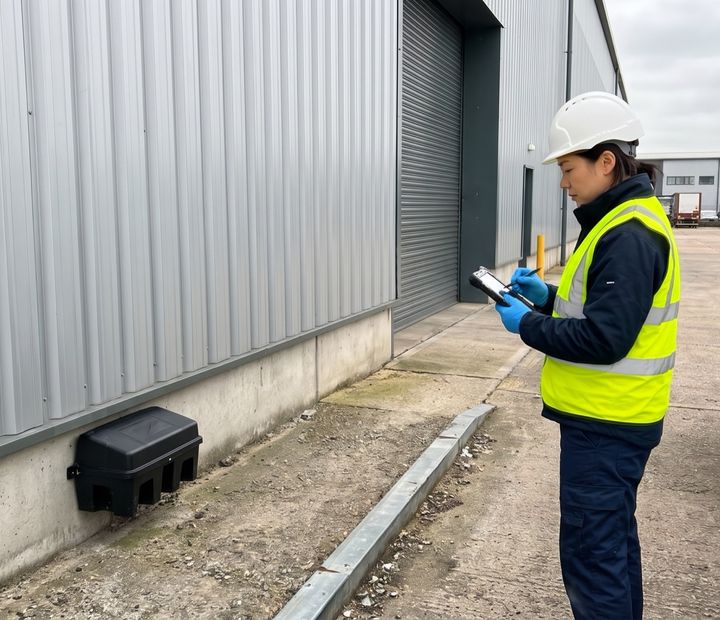
Northwest Environmental runs pest control contracts for warehouses, offices, food businesses and hospitality across Cheshire, Merseyside, Lancashire and Greater Manchester, working out from Warrington. We survey the site, clear live activity first, then visit on a risk-based schedule with audit-ready records, returning between visits if pests are seen. Call or use the contact form to book a survey.
Which signs should your staff report straight away?
On a commercial site the first evidence rarely reaches the manager. A picker notices gnawed shrink-wrap, a chef finds droppings behind the combi oven, a cleaner sees moths around the flour store. If nobody writes those finds down, nobody connects them until an auditor or environmental health officer does.
Worth reporting the same day:
- droppings along racking bases, behind equipment or in dry stores, and greasy smear marks where rodents run against walls;
- gnawed packaging, cables or door seals, and nesting material in ceiling voids, plant rooms or switch cupboards;
- cockroaches seen at night around dishwashers, glass washers and warm motor housings, or their brown egg cases tucked into crevices;
- small beetles or moths in flour, cereals, pet food or seed, and fine webbing in the folds of sacks;
- pigeons roosting on loading canopies, fouling on goods-in, or gulls nesting on a flat roof from late spring;
- wasps coming and going from a gap in the fascia near outdoor seating or the bin store.
A simple sightings log by the staff entrance, with the date, the location and who saw what, is one of the most useful records a site can keep.
Why do pest problems vary so much across the North West?
The region packs very different premises into a short drive. Around Warrington and along the M6, M62 and M56 corridors, large distribution units keep roller doors open for long shifts, and many back onto landscaped verges, balancing ponds and drainage ditches. Mice can arrive in deliveries, rats simply walk in from the bank outside, and a dock leveller pit that nobody lifts can become a harbourage.
Water shapes a great deal of it. The Mersey, the Manchester Ship Canal and the Bridgewater and Leeds and Liverpool canals run past wharves, industrial units, pubs and housing, and their banks give brown rats cover and a route from one site to the next. Merseyside’s docks add cargo sheds and wide flat roofs where gulls can nest.
In the mill towns of Lancashire and Greater Manchester, many older multi-storey buildings now hold workshops, flats and food businesses side by side, sharing voids, old drains and party walls that let mice and cockroaches move between occupiers. Out on the Cheshire plain and the mossland edges, farms, food producers and rural hospitality see rats and wood mice move into buildings once crops come off and the weather turns, and autumn is when that pressure usually builds.
City-centre hospitality has its own pattern: cramped back-of-house space, shared alley bins and late finishes that leave waste out overnight.
How does a commercial contract with us work?
It starts with a survey on foot, inside and out. We look at how goods arrive, where waste is held, where drains and services enter, the state of doors, seals and the roof line, and what lies beyond the fence. We also talk to the people who work there, because the night shift often knows exactly where the mice run.
From that we draw up a written plan covering monitoring points, pests, visit frequency, what is included and what is quoted separately, and the term. You see all of it before agreeing to anything.
Live activity is dealt with first, through closer-spaced visits until it stops. After that, where activity is low, non-toxic monitoring blocks and traps tell us whether anything is present without keeping poison down for its own sake. Each report says who must act on each point, whether that is you, your landlord or your facilities team, so a torn door seal does not sit unrepaired for three visits running.
Is treatment safe for staff, customers, food and animals?
Safety comes from choosing the least hazardous method that works and placing it well. Under the UK rodenticide stewardship regime, professional rodenticides are sold only to buyers who can show proof of competence, and baiting is expected to be targeted, inspected and time-limited rather than left down by default. Where bait is needed, it goes into locked, tamper-resistant stations fixed in position, away from open food, staff rest areas and anywhere a guard dog, site cat or livestock could reach it, and we search for and remove dead rodents.
Insecticides near food are applied when kitchens or lines are stopped and clean, using gels and targeted treatments rather than broad spraying, and we tell you when each area can be used again. Product data sheets go into your records for COSHH purposes. We do not use glue traps. Since 30 April 2024, setting one to catch a rodent in England has been an offence under the Glue Traps (Offences) Act 2022 unless a Natural England licence, granted only in exceptional cases, covers it. Sticky insect monitors are still allowed, so ours are set where a rodent or other animal cannot get caught.
How many visits will your site need?
There is no standard package. The plan sets a frequency for each site from what it handles, how it is built and what surrounds it, and says why. Open food or animal feed, roller doors that stand open all shift, and water, open land or a waste operation next door all push it up. A sealed office with a quiet history keeps it down. Some audit standards and customer codes add their own minimum or ask for periodic in-depth surveys on top. And if the trend stays quiet for a long spell, the annual review is the moment to ask whether visits can come down as well as up.
What proofing and housekeeping keeps pests out of premises?
Most commercial infestations trace back to a few repeat faults: roller doors that do not seal at the floor, dock shelters with torn curtains, pipe and cable entries left open after a fit-out, broken airbricks, and drains with missing covers or failed joints. A rat can get through a gap of around 15 mm and a mouse through about 6 mm, so small defects matter.
Inside, keep stock off the floor and clear of walls, rotate stored goods, clear spillages each shift and keep bins lidded and away from doors. On roofs and canopies, netting and spikes stop the roosting and nesting that housekeeping cannot. All wild birds, their eggs and nests in use or being built are protected under the Wildlife and Countryside Act 1981, with limited exceptions under licence, so proofing is planned around the nesting season; our bird proofing service covers this in detail.
Prevention also runs across boundaries. Rats living in a business park’s bin store can work the gardens and decking of houses beyond the fence, and the reverse is just as true, so every survey notes neighbouring land.
When does in-house pest control stop being enough?
A few shop-bought traps can be reasonable for a single mouse in an office. It stops being enough when activity keeps coming back, when it is in or near food, when there is any sign of rats, cockroaches or stored-product insects, or when you need records an inspector or auditor will accept. Handing the job to the cleaning contractor or maintenance team rarely works either, because a pest control plan needs one owner who reads the trend.
What should a business record, and who is responsible?
Food businesses must have adequate procedures to control pests under Regulation (EC) 852/2004, now part of assimilated UK law and enforced in England through the Food Safety and Hygiene (England) Regulations 2013 alongside the Food Safety Act 1990. In practice that means a pest control section in your HACCP-based plan or Safer Food Better Business pack, backed by a folder holding the site plan, visit reports, open and closed actions, product data sheets and your contractor’s competence certificates. Where pests present an imminent risk to health, officers can close premises with a hygiene emergency prohibition notice, so act quickly and record what you did.
A contract does not move responsibility. The food business operator stays responsible, and so does the occupier under the Prevention of Damage by Pests Act 1949, which, outside agricultural land, expects occupiers to tell the council in writing when they know rats or mice are present in substantial numbers, and lets the council require action by notice. Employers also owe staff general health, safety and welfare duties under the Health and Safety at Work etc. Act 1974, and pests in staff areas can fall within them.
For commercial tenants, the lease usually decides who repairs the fabric, so some proofing may fall to the landlord. For landlords and managing agents of residential blocks, section 11 of the Landlord and Tenant Act 1985, the Homes (Fitness for Human Habitation) Act 2018 and the Housing Health and Safety Rating System can all apply to pests in rented homes, and who pays depends on the cause and the tenancy. Dated visit reports go a long way towards settling those questions.
How we deal with it
- 1
Site survey
We walk the site inside and out: goods-in, waste areas, drains, doors and seals, roof line and voids, plus whatever sits beyond the fence, and we talk to the staff who see the site at night.
- 2
Written plan and agreement
You receive a site plan with numbered monitoring points, the pests covered, the visit frequency and why, what is included and what is quoted separately, and the term and notice period.
- 3
Clearing live activity
If pests are already active, we treat first with a short run of closer-spaced visits until activity stops, then move the site onto its routine schedule.
- 4
Routine inspections
Every monitoring point is checked and recorded. Where activity is low we rely on non-toxic monitoring and traps rather than keeping poison down for its own sake.
- 5
Reports and actions
Each visit ends with a report of findings, the actions we took and the actions for you, your landlord or facilities team, with proofing defects photographed.
- 6
Callouts and annual review
If staff see pests between visits, we arrange a callout under your agreement. Once a year we review trends with you and adjust the plan if the risk has changed.
Typical visits: An initial survey, then a short run of treatment visits if pests are already active. Routine inspections are set by risk: food sites often have eight or more a year, lower-risk offices and dry stores fewer, with callouts between visits as agreed.
Safety: Rodenticides are used only where monitoring shows a need, in locked tamper-resistant stations away from food, staff areas, guard dogs, site cats and livestock, following rodenticide stewardship rules, and all bait is removed once control is achieved. Insecticide work near food is done when kitchens or lines are stopped and clean. We do not use glue traps.
Commercial Pest Control: frequently asked questions
How many visits a year does a commercial pest control contract need?
It depends on the risk at your site rather than a fixed package. Food manufacturers, busy kitchens and warehouses holding food or animal feed usually need more routine inspections than offices or dry storage, and many food sites have eight or more a year. Premises beside water, open land or waste operations, or with a recent infestation, may need more. Some audit standards and retailer codes set their own minimum. We set out the frequency and our reasons in the written plan and review it with you each year.
What is included in a contract, and what is quoted separately?
Before you sign, we put in writing which pests are covered, how many routine visits you get, what happens if you report activity between visits and what reporting you receive. Work that usually sits outside routine visits, such as proofing repairs, bird netting, clearing heavy fouling or treating a pest not named in the agreement, is quoted separately so nothing comes as a surprise. The term and notice period are written in as well. If anything is unclear, ask us before you commit.
What will an environmental health officer ask to see?
Expect to be asked how you control pests and to show the evidence. That usually means a site plan of monitoring points, a report from each visit, a record of any activity and what was done about it, proofing recommendations and whether they were completed, data sheets for products used and your contractor's details. Officers also look at the premises themselves: gaps, droppings, open food and waste. Good records do not excuse an infestation, but they show it is being managed, which counts towards confidence in management under the hygiene rating.
Does a pest control contract transfer our legal responsibility to you?
No. Under food hygiene law the food business operator stays responsible for having adequate pest control procedures, and the occupier keeps its duties under the Prevention of Damage by Pests Act 1949. A contract is how you show you are meeting those duties: we inspect, treat, advise and record, and you act on the housekeeping and proofing points in our reports. Where a defect is your landlord's to repair under the lease, our report gives you the evidence to raise it with them.
Will one mouse sighting lower our food hygiene rating?
Not automatically. An officer judges the whole picture: hygiene, the structure and condition of the premises, and how confident they are in your management. A single sighting that was logged, reported and dealt with, with proofing in hand, is very different from droppings across a dry store and no records. Pests left unchecked can lower a score and, where there is an imminent risk to health, lead to closure under a hygiene emergency prohibition notice. Report early and keep the paperwork.
Can you work around our shifts, deliveries and trading hours?
Yes, and that is part of planning the agreement. Kitchens are usually treated after service or before opening, food production areas when lines are stopped and clean, and warehouses around the dock schedule so we are never in the way of loading. Our technicians follow your site induction, permit-to-work and PPE rules and sign in and out like any other contractor. If parts of your site are restricted or need security clearance, tell us at the survey and we will build it into the plan.
Do we have to tell the council if we have rats?
Possibly. The Prevention of Damage by Pests Act 1949 expects the occupier of land to tell the local council in writing when they know rats or mice are living on or visiting it in substantial numbers, with agricultural land treated differently. The council can then require treatment or structural work by notice. A business already dealing with the problem through a contractor, with records to prove it, is in a far stronger position. If rats are spreading onto or from neighbouring land, talk to the council's environmental health team.
Can you support BRCGS, SALSA or retailer audits?
Yes. Certification standards and retailer codes generally expect a documented, risk-based pest management system: a current site plan, competent people, visit reports, corrective actions closed off, trend analysis and periodic in-depth surveys of the whole site. The detail differs between standards and between issues of the same standard, so send us the clauses or customer code you are audited against and we will set up the visits, reporting and reviews to match. If your auditor has questions about the system, we can be on hand to answer them.
Can one contract cover sites across the North West?
Yes, as long as the sites sit within the area we cover: Cheshire, Merseyside, Lancashire and Greater Manchester, worked from Warrington. A business with a distribution unit near the motorway, a few shops and a head office can have one agreement, with visit frequencies set site by site and reports in the same format so they are easy to compare. Each site still keeps its own plan and records for local inspections. If you also have premises outside the North West, we will tell you plainly that we do not cover them.
Commercial Pest Control by county and town
Last updated: