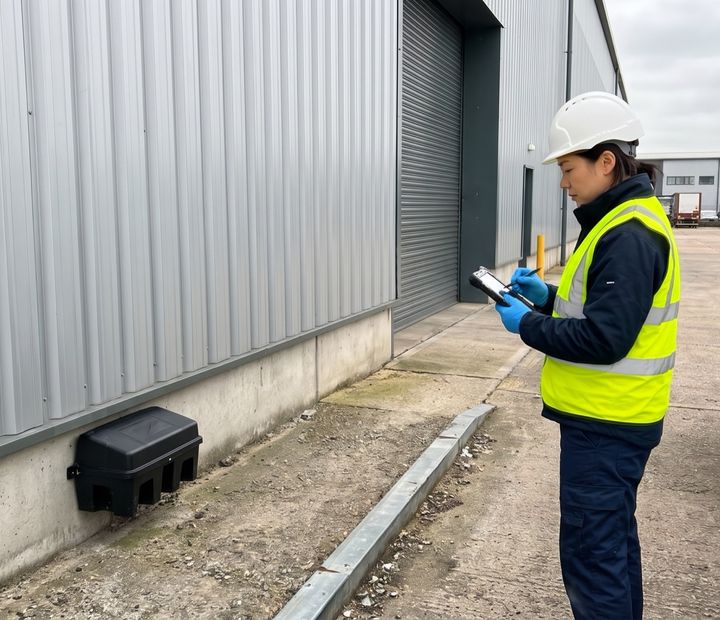
Northwest Environmental runs pest control agreements for Warrington businesses and landlords, from Birchwood Park offices and Omega warehouses to town-centre shops, kitchens and rural food sites. We survey the premises, clear any live activity, then visit on an agreed risk-based rota with a written report each time. Call or use the contact form to book a site survey.
Which Warrington premises do we look after?
Warrington’s premises are unusually varied, so no two agreements here look quite the same. Birchwood Park on its own is a 123-acre mixed-use park employing around 4,200 people and home to many nuclear-sector firms, so office kitchens, plant rooms and ceiling voids make up much of the work there. Omega, next to the M62, ended up largely as a warehousing district instead of the business park first envisaged, and it is one of several logistics locations served by the M6, M56 and M62, which between them box in much of the town.
Retail adds another layer, from the main shopping centre at Golden Square to the Gemini retail park, alongside the kitchens, takeaways and pubs of a borough that had around 210,900 residents in 2021. Out on the edges, a green belt measured at roughly 11,500 hectares in 2017 brings farms, food producers and rural venues into the picture.
Landlords are part of the commercial picture too. Check Warrington Borough Council’s website for current pest control services and charges.
Why do pests reach business sites here?
Water comes first. The Mersey flows through the middle of town, the Manchester Ship Canal cuts across the borough’s south, the Bridgewater Canal links Lymm with Walton Hall and Gardens, and in the west the Sankey Canal climbs the Sankey Brook valley through Sankey Valley Park. Banks, towpaths and the scrub beside them give brown rats places to burrow, cover to travel and water to drink, so premises backing onto them face pressure from beyond the fence all year.
The river’s flood history matters as well. In February 1990 the river spilled over along Knutsford Road and properties in Westy, Latchford, Howley, Arpley Bridge and Lower Walton were flooded, and the later flood scheme’s Howley phase was designed to carry walls from Riverside Retail Park to Howley Lane. Defences or not, high water pushes rats out of low-lying burrows, so riverside sites deserve a look after a long spell of heavy rain.
Then there is the town’s industrial past. Wire and steel, tanning, brewing, textiles and chemicals all shaped Warrington before heavy industry declined through the 1970s and 1980s. Where an old works building has since been converted, original drain runs and voids can hide routes that a modern unit would not have. Change is still going on, with Fiddlers Ferry Power Station decommissioned and the Soapworks being redeveloped as a data centre, and groundworks on that scale can move rats onto the land next door.
What do we usually find, premises by premises?
In distribution units, mice tend to ride in with deliveries or slip under roller doors, then settle into pallet stacks, dock leveller pits and the dead space behind racking. Rats usually start as an outdoor problem: burrows in soft landscaping, activity around compactors and general waste skips, and runs along the base of cladding.
Offices at Birchwood Park and elsewhere mainly see mice in ceiling voids, risers and behind kitchen units, plus wasps building in fascias and soffits that become obvious by late summer. Larger flat roofs can draw nesting gulls in spring. Gulls, their eggs and nests in use are protected, so roof proofing is best planned before the season starts.
Rows of older shops, like the late Victorian terracotta buildings on Bridge Street, can share roof spaces and drainage with neighbouring units. Where they do, mice move freely between occupiers, so treating one unit on its own rarely keeps it clear for long. On the rural fringe, barns and food stores see rats and mice move in as harvest finishes and nights turn colder.
How does a contract run from our Warrington base?
The process matches the one on our commercial pest control page: a walk-round survey, a written plan, clearing live activity, then routine inspections with a report after each one. What changes in Warrington is the detail. Working from a base in the town, we book routine visits here onto a fixed rota agreed with you in advance and move them only by agreement. We fit them around dock schedules, kitchen service and the access and induction rules set by business-park occupiers, and each report names the actions for you, your landlord or the park’s management company.
How can Warrington businesses keep pests out between visits?
Clear any fly-tipping promptly, because on private land that job falls to the owner, not the council. Keep compactor and skip areas swept and lidded, and if you manage blocks or shared houses, include the bin store in your checks now that households have weekly food waste caddies collected alongside the black bin. Before autumn, check door seals and airbricks on rural and edge-of-town buildings. After the river runs high, walk the boundary of riverside premises for fresh burrows. And log every sighting, so the next inspection starts with what your staff have already seen.
Commercial Pest Control in Warrington: what we see locally
- Birchwood Park spreads across 123 acres and employs around 4,200 people, so most work there is office-style monitoring of kitchens, vending points and ceiling voids, timed around each occupier's own access rules.
- Omega grew into a mainly warehousing site beside the M62, and units inside the M6, M56 and M62 motorway box face mice arriving with deliveries as well as rats moving in from the land around them.
- Sites that back onto the Mersey, the Manchester Ship Canal, the Bridgewater Canal or the Sankey Canal have water and bank cover for brown rats right beside them, so boundary monitoring counts for more than it does on an enclosed town-centre unit.
- With the borough's green belt measured at around 11,500 hectares in 2017, farms, food producers and rural venues on the borough's edges tend to see rodent pressure rise in autumn once crops are in and the weather cools.
- Bridge Street's late Victorian terracotta shops sit within a conservation area, so any proofing fixed to those frontages is kept discreet and checked with the council's planning team where needed.
How we deal with it
- 1
Site survey
We walk the site inside and out: goods-in, waste areas, drains, doors and seals, roof line and voids, plus whatever sits beyond the fence, and we talk to the staff who see the site at night.
- 2
Written plan and agreement
You receive a site plan with numbered monitoring points, the pests covered, the visit frequency and why, what is included and what is quoted separately, and the term and notice period.
- 3
Clearing live activity
If pests are already active, we treat first with a short run of closer-spaced visits until activity stops, then move the site onto its routine schedule.
- 4
Routine inspections
Every monitoring point is checked and recorded. Where activity is low we rely on non-toxic monitoring and traps rather than keeping poison down for its own sake.
- 5
Reports and actions
Each visit ends with a report of findings, the actions we took and the actions for you, your landlord or facilities team, with proofing defects photographed.
- 6
Callouts and annual review
If staff see pests between visits, we arrange a callout under your agreement. Once a year we review trends with you and adjust the plan if the risk has changed.
Commercial Pest Control in Warrington: frequently asked questions
Does Warrington Borough Council offer pest control contracts for businesses?
Many councils run a pest control service for residents, but what is covered, who can book and the charges all vary and can change, so check the council's own pest control pages before you book. If you rent, report the problem to your landlord first. If you would rather book a private firm, call or message us to arrange a visit.
I let out flats in Warrington. Is that domestic or commercial pest control?
A property you do not live in yourself counts as commercial work, and Warrington Borough Council takes the same view whether it is tenanted or standing empty. We can cover several lets under one agreement, arrange access through you or your agent and leave a dated report for each visit. Since weekly food waste collections began at the end of March 2026, shared bin stores in blocks and HMOs are worth adding to the inspection, because caddies left open or overflowing draw rodents.
Can you proof a shop in the Bridge Street conservation area without spoiling the frontage?
Usually, yes. Most rodent proofing on an older shop happens out of sight: sealing gaps around pipes and cables, fitting brush strips to doors, meshing airbricks and closing routes through shared voids. Visible work such as bird netting or spikes needs more thought. Around the Bridge Street and Church Street conservation areas we choose discreet fixings and colours, and before anything is fixed to the outside we suggest checking with the council's planning team, as a listed building may need listed building consent.
Rubbish has been dumped on our yard. Whose job is it to clear, and will it bring rats?
In Warrington, fly-tipping on private land, including land owned by housing associations, is the landowner's to clear rather than the council's. Bags of food waste, old furniture and builders' rubble all give rats food or shelter, so the sooner it goes the better. We can add the area to the next inspection, check for burrows and runs, and note security fixes such as gates or lighting that would make dumping harder. The council's website also has a page for reporting a rodent sighting.
A large site near us is being redeveloped. Should we expect more rodents?
It is a real possibility. Demolition and groundworks break up burrows and disturb old drains, and displaced rats tend to head for the nearest buildings offering food and cover. Warrington has big sites changing use, from the decommissioned Fiddlers Ferry Power Station to the Soapworks, which is being redeveloped as a data centre. If work starts next to you, tell us: we can add external monitoring along the shared boundary, check drains and door seals, and arrange an extra visit if activity appears.
How many visits a year does a commercial pest control contract need?
It depends on the risk at your site rather than a fixed package. Food manufacturers, busy kitchens and warehouses holding food or animal feed usually need more routine inspections than offices or dry storage, and many food sites have eight or more a year. Premises beside water, open land or waste operations, or with a recent infestation, may need more. Some audit standards and retailer codes set their own minimum. We set out the frequency and our reasons in the written plan and review it with you each year.
What is included in a contract, and what is quoted separately?
Before you sign, we put in writing which pests are covered, how many routine visits you get, what happens if you report activity between visits and what reporting you receive. Work that usually sits outside routine visits, such as proofing repairs, bird netting, clearing heavy fouling or treating a pest not named in the agreement, is quoted separately so nothing comes as a surprise. The term and notice period are written in as well. If anything is unclear, ask us before you commit.
What will an environmental health officer ask to see?
Expect to be asked how you control pests and to show the evidence. That usually means a site plan of monitoring points, a report from each visit, a record of any activity and what was done about it, proofing recommendations and whether they were completed, data sheets for products used and your contractor's details. Officers also look at the premises themselves: gaps, droppings, open food and waste. Good records do not excuse an infestation, but they show it is being managed, which counts towards confidence in management under the hygiene rating.
More in Warrington
Last updated: