Northwest Environmental covers pest control for Chester's homes, rented property and business premises, including Hoole, Handbridge, Blacon and the historic centre. We tackle rats and mice, bed bugs, wasps and pigeons, always survey first and book any follow-up visits from our Warrington base. Ring us or use the enquiry form, giving your postcode, to arrange a visit.
A river bend, a sandstone ridge and the old marshes
Chester was built on a low sandstone ridge where the Dee makes an S-shaped loop, and the river still wraps around the south and west of the centre. Before the city spread, the ground running west towards the estuary was marsh and wetland, with heath and woodland to the east and north. The Dee has never been a quiet neighbour: several bridges at the Handbridge crossing were damaged by floods and rebuilt before the Old Dee Bridge that stands there now.
For pest work the river matters in two ways. Brown rats dig into soft banks and travel along the water’s edge, so gardens and premises close to the Groves or the Handbridge bank are within easy reach of them. And when the river runs high, rats living in bank burrows are pushed uphill into the nearest dry cover, which is often a shed, a compost bin or the void under a conservatory floor.
Why do the Rows behave like one long building?
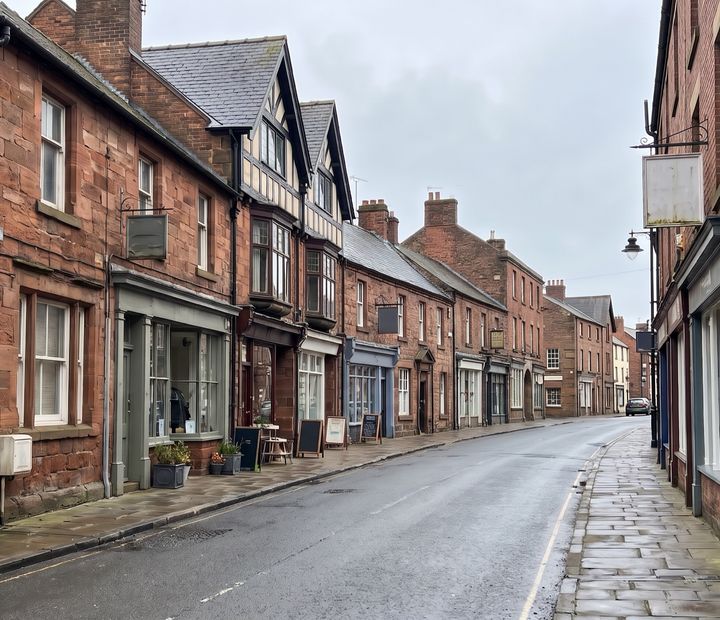
The Rows are Chester’s own arrangement. Along Watergate Street, Eastgate Street, Northgate Street and Upper Bridge Street, covered walkways at first-floor level run in front of a second tier of premises, with another set of shops below at street level. Cafés, restaurants and offices are mixed in with the shops. At least 95 of the buildings involved are listed, and about 20 medieval stone undercrofts still sit beneath them.
That layering is why a mouse problem in the centre rarely belongs to one business. Cellars, floor voids, chimney breasts and shared service runs connect premises that look entirely separate from the street, and the smell of one kitchen draws rodents through to the next. Our rat and mouse control here relies on monitoring points along the routes between units, close attention to undercroft drainage and a log each trader can show an environmental health officer. Proofing uses materials that can come out again without harming old fabric, and nothing is fixed to a listed wall until the owner confirms it is allowed.
Pigeons, listed frontages and the council’s warning
Window heads, timber ledges and the deep shelter under the walkways suit roosting feral pigeons, and the city walls, nearly two miles long and Grade I listed, add plenty more of the old stonework pigeons favour. Most of the black-and-white frontages that give the centre its character are Victorian revival buildings rather than medieval ones, but the whole core has been a conservation area since 1969 and much of it is listed.
The council wrote to businesses on the Rows in October 2025 about banners, A-boards and signs attached to historic fabric without consent, reporting a rise in unauthorised works to listed buildings and warning that legal action would follow. Bird spikes and netting draw the same scrutiny as a sign bracket. Our bird proofing surveys in the centre therefore record each proposed fixing, favour low-profile wire, gel and netting that can be taken down without damage, and wait for the owner or managing agent to confirm consent before anyone climbs a ladder.
Terraces, semis and estates beyond the walls
Housing changes quickly once you leave the centre. Hoole, a short walk east of the station, is mostly Victorian terraces mixed with 1930s semi-detached homes, and Hoole Road is a conservation area in its own right. Across the river, Handbridge began as a largely working-class Victorian district, with bigger houses towards Queens Park and later additions such as the Salmon Leap flats. Upton-by-Chester grew from country houses and ribbon development into post-war estates, and Blacon, to the north-west, is predominantly council housing. Housing now covers most of the former Chester General marshalling yard and engine depot.
Each type lets pests in differently. Terraces share roof spaces and under-floor voids, so mice move along a row and one house rarely holds the whole problem. Semis and estate houses usually have longer gardens with decking, sheds and compost bins, where rats like to burrow. Two disused railway lines, the Blacon line (now a cycle path and walkway) and the trackbed followed by the Millennium Greenway through Hoole, also run as green corridors through the suburbs, giving rodents sheltered routes through otherwise built-up ground.
Guest houses, students and sites that never close
Being close to the station and the centre has given Hoole a cluster of hotels, guest houses and B&Bs. The University of Chester adds about 14,900 students, with its main campus on Parkgate Road just north of the walls and further sites at Kingsway, Queen’s Park and the former County Hall. Where beds and luggage change hands this often, bed bugs travel with them, so our bed bug control for guest houses and student lets starts with a close inspection of the affected room and the rooms beside it.
The Countess of Chester Hospital on Liverpool Road runs a 24-hour emergency department alongside its 625 beds, and Chester Business Park holds some 175 acres of offices south of the city between Wrexham Road and the A55. Race meetings on the Roodee draw tens of thousands of visitors between spring and autumn, and the food waste left after any big crowd soon attracts gulls, pigeons and rats. Big, busy sites like these need commercial pest control on a fixed schedule, with mapped monitoring points and a written report after every visit.
What does Cheshire West and Chester Council offer, and where does it stop?
The council still operates a domestic pest service, with a charge for each treatment and officers calling on weekdays in a morning or afternoon slot. Its list is broad: rats and mice, wasps and hornets, ants, cockroaches and other insects, moles and squirrels, with pigeon problems surveyed before any advice is given. Bees are outside its scope, wasps get no out-of-hours cover and there is no reduced rate for tenants, pensioners or people on benefits. Businesses deal with a separate commercial service that sells one-off jobs or annual contracts.
A private visit tends to make more sense when the job needs proofing as well as treatment, when a landlord or food business wants a written record to keep, or when several neighbouring properties need treating at the same time.
Planning Chester visits from Warrington
Chester sits at the western end of our Cheshire rounds, and we group visits in the city so that follow-ups and monitoring checks fall on predictable days. Homes in the suburbs, traders on the Rows and offices on the business park can share the same route. Those rounds carry on to Northwich and over to the Wirral, so a business with branches in more than one place deals with a single office.
What Cheshire West and Chester Council offers
The council runs a charged pest service for domestic properties, with officers calling on weekdays in a morning or afternoon slot booked through its online appointment form; its list covers rodents, wasps and hornets, ants, cockroaches, moles, squirrels and insects such as bed bugs and fleas, and pigeon problems are looked at only after a survey visit. It does not treat bees, has no out-of-hours cover for wasps and lists no free treatment or concessions for benefit claimants, pensioners or tenants. Businesses are served separately, through single jobs or annual contracts carried out on weekdays.
Council pest control page (checked 2026-10-24).
Our services in Chester
Rat & Mouse Control in Chester
The Dee loops round the centre, the Shropshire Union Canal runs through a sandstone cutting beside the walls and old railway lines in Blacon and Hoole now form green corridors, so rats have banks and cover running through the built-up area.
Bird Control & Proofing in Chester
At least 95 listed buildings carry sections of the Rows, and the council warned in October 2025 about unauthorised works to historic fabric, so pigeon proofing in the centre starts with a survey and a consent check.
Commercial Pest Control in Chester
Cafés and restaurants on two tiers of the Rows, offices spread over 175 acres of Chester Business Park and Hoole's hotels and guest houses all benefit from scheduled visits and records an inspector or client can follow.
Bed Bug Control in Chester
Hoole's hotels, guest houses and B&Bs and a student body of about 14,900 mean beds, furniture and luggage change hands all year, which is exactly how bed bugs move from one address to the next.
Wasp & Hornet Nest Removal in Chester
The council's wasp service runs on weekdays with no out-of-hours cover and no bee treatments, so households in Hoole's 1930s semis or Upton's estates with a nest beside a door may prefer a private visit booked around them.
Other services available in Chester:
Local factors behind pest problems in Chester
- Chester stands at the end of a sandstone ridge inside an S-shaped bend of the River Dee, and the ground to the west, towards the estuary, was historically marsh and wetland. [Wikipedia]
- The Shropshire Union Canal passes the city walls in a deep cutting through red sandstone, sends a branch down to the Dee and continues north to Ellesmere Port on the Mersey. [Wikipedia]
- The Rows are covered first-floor walkways with a second tier of premises behind them; at least 95 of the buildings they pass through are listed, and about 20 medieval stone undercrofts survive beneath them. [Wikipedia]
- In October 2025 the council told Rows businesses to take down signage fixed to historic fabric without consent, after reporting a rise in unauthorised works to listed buildings. [Cheshire West and Chester Council]
- Hoole, just east of the centre, is largely Victorian terraces and 1930s semi-detached homes, and being close to the station has given it a cluster of hotels, guest houses and B&Bs. [Wikipedia]
- Handbridge, on the south bank of the Dee, developed as a mainly working-class Victorian district, with larger houses built towards Queens Park. [Wikipedia]
- Upton-by-Chester grew from country houses and ribbon development into housing estates, and since the post-war building boom very little development land is left. [Wikipedia]
- The old Blacon railway line, which last carried freight in 1992, is now a surfaced cycle path and walkway, and Hoole's Millennium Greenway also follows a former trackbed. [Wikipedia]
- The University of Chester has about 14,900 students, and its main 32-acre campus is on Parkgate Road just north of the city walls. [Wikipedia]
- Chester Business Park opened in 1988 and covers about 175 acres south of the city, between Wrexham Road (A483) and the A55 southerly bypass. [Wikipedia]
Pest control in Chester: frequently asked questions
Will Cheshire West and Chester Council treat pests in my Chester home?
The council runs a charged domestic service. Officers work Monday to Friday, arriving during a morning or afternoon window, and appointments go through the council's online booking form; its pest page lists no phone number. Rats, mice, wasps, hornets, ants, cockroaches, moles, squirrels and insects such as fleas and bed bugs are covered, and a rodent booking includes up to three visits in one calendar month. Pigeons need a survey first. Bees are not treated, wasp call-outs outside working hours are not available and there are no concessions for tenants, pensioners or people on benefits.
Do you cover Hoole, Handbridge, Blacon and Upton, and the villages just outside Chester?
Yes. We work right across the city's suburbs, from Blacon and Upton north of the centre to Hoole and Boughton on the east side and Handbridge, Lache and Curzon Park south of the river. Places just beyond the city edge, such as Christleton, Guilden Sutton and Waverton, are served on the same rounds. Send your postcode with your enquiry and we will tell you which day we can come before anyone leaves Warrington.
We run a café on the Rows. Can mice reach us from the units next door?
They can. Rows buildings stack premises on two levels, one at street level and one behind the first-floor walkway, and many sit over medieval stone undercrofts, so cellars, voids and service runs often link businesses that look separate from the street. A colony feeding in one kitchen may be nesting under the next shop. We place monitoring along the routes that cross between units, check the undercroft and drainage below and give you a written log for your food safety records. Where neighbours agree to take part, treating the run of buildings together works far better.
Rats keep appearing from the old railway path behind our Blacon home. What can be done?
The former Blacon line is now a cycle path and walkway, and green corridors like it give rats cover to travel and dig along. We cannot treat land outside your boundary, but we can stop your garden being the place they feed and nest. That means finding burrows, fixing secured stations on the runs that cross your fence, removing food such as spilled bird seed, closing the space under sheds and decking and checking your drains. Where several properties on the same stretch are affected, treating them on one round gives a better result.
Guests at our Hoole guest house have reported bites. What happens next?
Take the room out of use, seal the bedding in a bag and avoid carrying furniture into other rooms, which can spread the insects. Our technician inspects mattress seams, headboards, skirting and luggage racks in that room and the rooms either side, confirms whether bed bugs are the cause and plans treatment with a follow-up check. Hoole has a concentration of hotels, guest houses and B&Bs near the station, so we arrange visits around arrivals and departures where possible and leave a written record for your files.
Is the summer gap between student tenancies a good time for pest checks?
Often, yes. With about 14,900 students at the University of Chester, many shared houses change occupants over the summer, when rooms are empty, furniture has been moved and bins are often fuller than usual. An empty house lets us look under floors, behind kitchen units and in lofts without disturbing anyone, seal gaps before new tenants arrive and check beds and sofas left behind for bed bugs. Landlords and agents receive a report to keep with the tenancy paperwork.
Can one agreement cover an office on Chester Business Park and a shop in the centre?
Yes. Both sites can sit under a single agreement, each with a schedule and set of monitoring points suited to it, and you receive a report after every visit. A large office park such as the 175-acre site south of the city calls for perimeter rodent checks and attention to roofs and bin stores, while a listed shop or café in the centre needs discreet monitoring that leaves historic fabric alone. The council sells weekday business contracts too, so weigh up what each arrangement covers before you choose.
Nearby areas we also cover
Sources (11)
Last updated: