Northwest Environmental handles pest control for homes and businesses across Preston, from Fulwood, Ashton-on-Ribble and Deepdale to the city's rural parishes. We treat rats, mice, bed bugs, wasps and other insects, proof buildings against nuisance birds and survey before treating, with visit dates agreed in advance. Book by phone or through our contact form.
Why do Preston’s inner terraces see so much rodent activity?
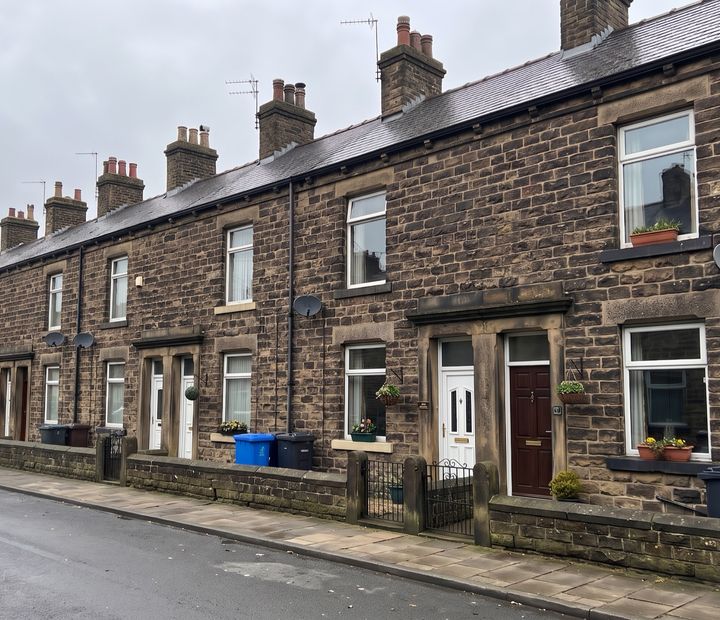
Several districts close to the city centre are built around terraces. Plungington, north-west of the centre, was laid out as working-class housing in the late 1880s, and the new-town development corporation later improved part of it and added new homes. Deepdale ward, on the north-eastern edge of the centre, is mostly terraced too, and in Ashton-on-Ribble further rows run between the Lane Ends shops and Ashton Park.
What links these streets, from a pest point of view, is shared construction. Rows built in one go often have continuous roof spaces, floor voids that pass beneath party walls and drains laid as a single run behind the houses. A mouse colony in one kitchen can be feeding in three, and a cracked joint in an old clay drain can bring rats up under a back yard several doors from where the scratching is heard. When we survey a terrace, we look beyond the house that called us: the gap around a neighbour’s waste pipe, a bricked-up outside toilet, an open airbrick on the gable end.
Avenham adds another layer. Once an area of back-to-back terraces, it now mixes multi-occupancy houses, newer flats, old-style high-rise blocks and lower-income homes. Where several households share bins, landings and service ducts, one neglected store cupboard or a split refuse sack can sustain mice for a whole building, so proofing and housekeeping advice has to reach every occupant, not just the person who rang.
How do the Ribble, the dock basin and the canal affect pests?
Water shapes much of the city’s pest pattern. The River Ribble runs along Preston’s southern edge and stays tidal up to Fishwick Bottoms, and on spring tides a bore can push upstream as far as the dock. Brown rats swim well and dig readily into soft banks, so gardens and open ground near the water are natural foraging territory. A run of heavy rain or an exceptionally high tide floods burrows and sends rats looking for drier cover, often under sheds, decking and outbuildings on the nearest streets.
The former dock is now mainly homes and businesses, with some light industry, around the Albert Edward Basin, whose western end is a marina and whose water is replenished from the river on spring tides. Homes on the Victoria Quay estate were finished in 1995, a former dock shed has become Victoria Mansions, and the area also holds a cinema and restaurant complex and the Riversway retail park. Open water, commercial food waste and modern housing in one place is a combination we meet on regenerated waterfronts across the region, and it is why we encourage management companies and businesses on the same stretch to coordinate their proofing and monitoring.
The Lancaster Canal now finishes at Ashton basin, on the city’s edge, after a couple of miles through built-up Preston, and the Ribble Link climbs Savick Brook through eight locks to meet it. Overgrown banks, food scraps left on the towpath and the backs of waterside gardens give rodents shelter and steady meals, so homes near the canal and the brook are worth checking each autumn.
What do city-centre shops and business sites need?
Fishergate and Friargate are the city’s main shopping streets, and St George’s shopping centre has traded since the 1960s. Since 2016 the old covered market has been the Market Hall, and in the Box Market, on the site of the old fish market, vendors sell food and drink from converted shipping containers. Small units packed close together rarely keep a mouse problem to themselves. For food traders, the inspector’s first question is usually what monitoring is in place and what was done about the last sighting, and a schedule of recorded visits answers both.
Away from the centre, the setting changes to roller shutters, racking and loading bays. Anchorage Business Park on the docklands holds some 20 to 30 small and medium firms, the Bluebell Way business park lies on the Brookfield boundary, and east of the M6 at Ribbleton a large industrial estate shares the land with farmland and no housing at all. Sites that back onto fields take pressure from field rodents every autumn, and warehouses with open loading doors let in birds as well as mice. Our commercial pest control contracts are built around that kind of site, with mapped monitoring points, visits at agreed intervals and a written report after each one.
Hospitals and the university bring their own constraints. Preston has Royal Preston Hospital and the private Fulwood Hall Hospital in Fulwood, the Greater Lancashire Hospital in Ribbleton and the University of Lancashire’s main campus, and on sites like these pest work has to fit around patients, students and staff, with access, timing and products agreed beforehand.
Why do student lets and shared houses need particular care?
A 2013/14 report put the university’s main campus at just over 36,000 students, the largest in Lancashire. Many students live in the parts of Plungington nearest the centre, and the gated Trinity Student Village lies in the Town Centre ward. Across the city, the share of households renting privately climbed from 18.0% in 2011 to 22.4% in 2021.
Rented and shared housing turns over quickly, and bed bugs travel with it: in a suitcase after a trip home, in a second-hand mattress bought for a new tenancy, or along the pipework between rooms in a converted house. Treating one room seldom ends the problem in a house of multiple occupation, so our bed bug control in shared houses starts by inspecting the neighbouring rooms too. For landlords, the summer changeover is the best moment for a check, when rooms are empty and furniture can be examined properly.
How do Fulwood, Cottam and the rural parishes differ?
North of the centre, Fulwood ranks among Preston’s greener districts. Many of its larger houses date from the Victorian period, and newer residential areas such as Longsands have gone up on land made available from the 1970s onwards. Older, bigger houses tend to have roomy lofts, eaves and outbuildings that suit wasps, so wasp nest removal here usually comes down to safe access to roof spaces and soffits in late summer.
Cottam, a former farming community, is now almost entirely new-build. Modern construction is tighter than a Victorian terrace, yet service entries, voids behind kitchen units and weep vents still let mice in, and gardens that back onto hedges or open ground see them arrive in autumn.
Further out, the low-lying farmland to the north and east is given over to dairying, and a 2011 list of ten Lancashire Cheese dairies placed six of them in the district, whose north-east falls inside the Forest of Bowland Area of Outstanding Natural Beauty. Dairy farms and other rural sites here need rodent work planned around livestock, working dogs and feed stores, with baiting that stops once the rats have gone.
How do we schedule work in Preston?
Preston jobs are planned from our Warrington base in regular runs, so follow-up visits land on predictable days and businesses can fix monitoring dates well ahead. Work across the river in South Ribble goes on the same runs, so a business with premises on both banks can be handled as one job, and our Chorley & Leyland and Blackburn & Darwen pages cover the neighbouring towns on those routes.
Our services in Preston
Rat & Mouse Control in Preston
Rats can use the tidal Ribble, the canal at Ashton basin and Savick Brook as corridors, while the terraced rows of Plungington and Deepdale let mice pass between houses through shared voids.
Commercial Pest Control in Preston
Traders in the Market Hall, food vendors in the Box Market, shops on Fishergate and Friargate, and units at Anchorage Business Park, Bluebell Way and the industrial estate east of the M6 all benefit from scheduled, recorded monitoring.
Bed Bug Control in Preston
With the University of Lancashire's main campus in the city and more than a fifth of households renting privately, bed bugs travel between shared houses and flats in luggage and second-hand furniture.
Bird Control & Proofing in Preston
Retail parks at Riversway and Deepdale, the dockside and large city-centre roofs give gulls and pigeons space close to food waste, and listed buildings such as the bus station need proofing that suits their fabric.
Wasp & Hornet Nest Removal in Preston
Fulwood, one of Preston's greener districts, has many larger Victorian houses whose roomy lofts, eaves and outbuildings give queen wasps sheltered spots to start nests in spring, with colonies at their largest in late summer.
Other services available in Preston:
Local factors behind pest problems in Preston
- The River Ribble marks the city's southern edge and is tidal up to Fishwick Bottoms; on spring tides a bore can run as far as Preston Dock. [Wikipedia]
- Shipping stopped using the dock in 1981. A marina occupies the western end of the Albert Edward Basin, which takes in river water on spring tides, and after the 1977 docklands flood, banks were built along the river edge. [Wikipedia]
- The Lancaster Canal now finishes at Ashton basin after about two miles through urban Preston, and the Ribble Link, opened in 2002, climbs Savick Brook through eight locks to meet it. [Wikipedia]
- Plungington's terraced streets, north-west of the centre, were built as working-class housing in the late 1880s; the new-town development corporation later improved some and added new homes, and many students live in the streets closest to the centre. [Wikipedia]
- Avenham, once an area of back-to-back terraces, now has a mix of shared multi-occupancy houses, newer flats, old-style high-rise blocks and low-income homes. [Wikipedia]
- Between the 2011 and 2021 censuses the share of Preston households renting privately grew to 22.4% from 18.0%, while owner-occupation dropped to 58.3% from 60.6%. [Office for National Statistics]
- The old covered market was redeveloped as the Market Hall in 2016, and in the former fish market the Box Market's vendors sell food and drink from converted shipping containers. [Wikipedia]
- In Ribbleton, the land east of the M6 holds a large industrial estate and farmland but no housing. [Wikipedia]
- Dairy farms cover the low-lying north and east of the district, and a 2011 list of ten Lancashire Cheese dairies included six within it. [Wikipedia]
Pest control in Preston: frequently asked questions
Which parts of Preston do you cover?
All of PR1 and PR2, plus the parts of PR3 and PR4 that fall inside the city. That takes in the centre, Avenham, Plungington, Deepdale, Fishwick, Ribbleton, Fulwood, Ingol, Cottam, Lea and Ashton-on-Ribble, along with parishes such as Goosnargh, Grimsargh, Broughton and Woodplumpton. Business premises are covered too, from the docklands to the industrial estate east of the M6 and the Bluebell Way business park. Give us the street and postcode when you book and we will fit the visit into the nearest Preston run.
Do you work south of the river in Penwortham and Walton-le-Dale?
Yes. The south bank of the Ribble belongs to South Ribble borough rather than the city, but for us it is part of the same patch. Penwortham shares the PR1 district with central Preston, and Walton-le-Dale, Bamber Bridge and Lostock Hall sit in PR5. Rats along the river take no notice of the council boundary, and a business with premises on both banks can have them handled under one contract. Our Chorley & Leyland page covers the towns further south.
I let a shared house near the university. How should I handle bed bugs between tenancies?
Book an inspection while the house is empty, ideally in the summer gap between tenancies. Empty rooms let us check bed frames, mattress seams, skirting boards and sockets properly, and treat before new tenants bring their belongings in. If a tenant reports bites during the year, ask them not to move furniture between rooms or start sleeping in another bedroom, as that tends to spread the problem. In a house of multiple occupation we inspect neighbouring rooms as well as the reported one and give you a written report for your records.
We live in a flat near the dock basin. Which pests should we watch for?
Mainly rats and birds. Open water and soft ground give rats cover, and the restaurants, cinema and retail park on the docklands produce food waste that draws both rats and gulls. In a managed block, report droppings, gnawing or birds nesting on balconies to the management company as well as dealing with your own flat, because bin stores, service risers and roofs are shared. We can survey the common parts with the managing agent, proof bin stores, fit bird deterrents and treat individual flats on the same visit, so the whole block is dealt with together.
Can you look after a stall or food unit in the Market Hall or Box Market?
Yes. Small food units suit a scheduled service: a plan of monitoring points for mice and crawling insects, fly control where food is prepared, visits at agreed intervals and a written record of every check, sighting and action. Where traders work in close quarters, a problem in one unit soon reaches the next, so if several stallholders use us we can line up their visits and, with their agreement, share what we find. Those records are what an environmental health officer will ask for, and they show the market operator that pests are being managed.
Our house in Cottam is a new-build. Why have we got mice?
New homes are tighter than old ones, but they are not sealed. Mice use the gaps where pipes and cables enter, unfinished voids behind kitchen units and bath panels, and weep vents in the brickwork. Cottam was a farming community before it became almost entirely new-build, and mice living in hedges, verges and open ground nearby move towards houses as autumn arrives, more so when groundworks disturb them. We find the entry point, trap indoors, proof the gaps and point out anything that should go back to the builder.
How do you fit Preston visits around a base in Warrington?
We plan Preston work in regular runs rather than one-off trips, which lets us agree follow-up dates at the first visit and keep to them. Rodent treatments depend on a return visit about a week later, and commercial monitoring needs fixed dates, so predictable scheduling matters more here than speed. When you book, we offer the next available slot on a Preston run and confirm the follow-up dates at the same time.
Nearby areas we also cover
Sources (9)
Last updated: