Northwest Environmental looks after Lymm homes and businesses, including Oughtrington, Heatley and Statham. We deal with wasp nests, grey squirrels in roof spaces, rodents and insects, and run monitoring visits for pubs, shops and food premises. Ring us or send the website form and we will book a visit from our Warrington base, about six miles west.
Why does a canal through the middle matter?
Plenty of towns have a canal along one edge. In Lymm the Bridgewater Canal cuts directly through the centre, and parish records quoted by Cheshire Life say its arrival in the 1760s split the village in two. Many of the parish’s listed structures belong to the waterway, including Brindley aqueducts at Barsbank Lane, Bridgewater Street and Burford Lane and an old canal dock under a vaulted roof.
The result is a long ribbon of water, towpath and back gardens within easy reach of a large part of the village. Brown rats swim well and dig into soft, overgrown banks, and anywhere people feed ducks or drop food along a towpath gives them a reason to stay. Where a garden meets the canal, the activity we trace usually leads to a run beneath decking, a shed floor or a compost heap near the fence. The canal-side pubs feel it differently: the Barn Owl Inn sits right on the bank beside Warrington Road, and anywhere food and drink are served outside near the water draws hungry wasps in late August.
Lymm Dam, the Dingle and the Lower Dam
The lake at Lymm Dam is man-made. A dam raised in 1824, while the road now numbered the A56 was under construction, gathered the water of Bradley Brook, Mag Brook and Kaylane Brook, and the outflow still drops beneath the road and along the Dingle, a narrow valley, before reaching the Lower Dam in the heart of the village. Cottages stand close to the Lower Dam, and Slitten Brook cuts a second ravine through the middle of the village at Slitten Gorge, where traces of an old water-powered slitting mill survive.
Warrington Borough Council took over the lake and the parkland around it in the early 1980s, so a rat problem or a wasp nest on the parkland is for the council to deal with as land manager. Our work starts at the boundary. Homes backing onto these watercourses get rats moving up from the banks, particularly where bird seed, chicken feed or kitchen scraps are within reach. Treatment works best when airbricks, gaps under doors and holes into sheds and garages are closed while monitoring is in place, rather than months afterwards.
What happens when the Bollin rises?
The River Bollin forms the parish’s eastern edge, separating Lymm from Warburton, while the Manchester Ship Canal and the Mersey lie only a little over a mile to the north. In January 2021 the Bollin overflowed, and water running off sodden fields shut roads including Warrington Lane; the parish council offered the Village Hall on Pepper Street as a place to shelter.
High water matters for rodent control because it floods burrows. Rats forced out of riverbanks and field margins head for the nearest dry cover, often a garage, stable, log store or the void beneath a suspended timber floor, so properties with no history of rats can see them for the first time after a wet spell. Once the water drops, walk round outbuildings and along the base of walls looking for fresh droppings, gnawing and new holes, and get in touch early rather than waiting for a colony to settle.
Fustian cottages, merchants’ houses and a moated hall
Lymm’s houses record its trades and its railway. Cottages built for fustian cutters still stand, and in the mid-Victorian decades business owners put up substantial Gothic and Italianate houses around the village fringes. Trains arrived at Lymm and Heatley in 1853, and well-off Manchester merchants followed, building fine homes within reach of the station and giving the village an early commuter character.
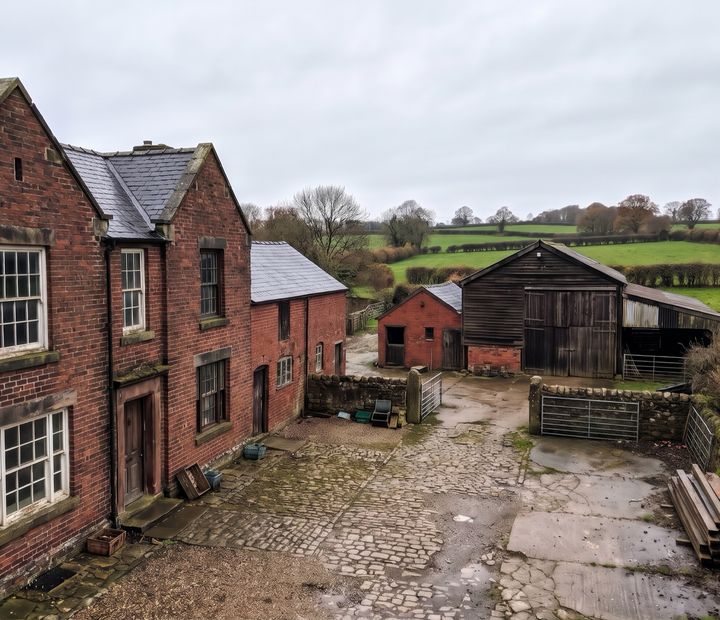
Larger Victorian houses of that kind usually come with big lofts that nobody visits, ornate timber at the gables and eaves, and generous gardens. Those features suit grey squirrels looking for winter quarters and wasp queens hunting for a dry cavity in spring, and both pests take advantage of a slipped tile or a softened fascia board long before the owner notices it.
The parish has 55 listed buildings. Lymm Cross is Grade I, and Lymm Hall, a late sixteenth-century house of sandstone and brick that was originally moated, is Grade II*. The remainder are Grade II, and they include a handful of timber-framed buildings and a number of farmhouses, such as Tanyard Farmhouse and the John Douglas farmhouse on Burford Lane. Work to a listed building that affects its character can need listed building consent, so on these properties we agree mesh, fixings and any replacement timber with the owner before proofing begins.
Farmland, hamlets and the Green Belt
Away from the centre, the parish is a scatter of hamlets, Heatley and Broomedge among them, set in the Green Belt countryside that surrounds Lymm. The railway that closed to all traffic in 1985 now carries the Trans Pennine Trail across the parish, and the neighbourhood plan published in June 2026 includes policies to protect trees, hedgerows, watercourses and wildlife corridors.
For pests, that landscape works like a network of roads. Grey squirrels follow hedges and tree lines to reach rooftops, wood mice and house mice move into farm buildings and kitchens as autumn weather sets in, and barns and stables give wasp queens undisturbed spots to build. Farms and smallholdings also bring livestock and stored feed into the picture, so any bait is kept in secured stations and treatment is planned around the animals.
The Cross, Eagle Brow and a lively evening trade
The commercial centre is compact. Independent shops gather around The Cross, Eagle Brow has a bakery that six generations of one family have run from a building dating to 1780, and the pubs and restaurants include the Golden Fleece on The Cross and the Brewery Tap on Bridgewater Street. The neighbourhood plan describes the centre’s evening economy as distinctive and aims to balance it with daytime trade.
Busy kitchens, bottle stores and bins behind older buildings give rats and mice food, and the gaps around pipes and cellar flaps in historic premises give them a way in. Food businesses must be able to show they control pests, so our commercial pest control visits fit around opening hours and leave a written record each time. Motorway trade brings a different scale of waste and deliveries to the Poplar 2000 services at the Lymm Interchange, where the M6, M56 and A50 meet.
What does Warrington Borough Council cover?
Many councils run a pest control service for residents, but what is covered, who can book and the charges all vary and can change, so check the council’s own pest control pages before you book. If you rent, report the problem to your landlord first. If you would rather book a private firm, call or message us to arrange a visit.
Six miles from our Warrington base
Warrington lies about six miles west of Lymm, and the village has junctions of both the M6 and M56 within three miles, so it sits on routes our technicians already use for work in Stockton Heath and Grappenhall and across Warrington itself. That closeness matters most for jobs that need repeat visits: daily trap checks during squirrel removal, follow-up checks on rat and mouse control, and regular monitoring for pubs and shops that want the same slot each month.
What Warrington Borough Council offers
Check the Warrington Borough Council website for current pest control services, who can book and what it charges, because these change. If you rent, ask your landlord who is responsible for treatment.
Council pest control page (checked 2026-10-24).
Our services in Lymm
Wasp & Hornet Nest Removal in Lymm
A pub on the canal bank, the restaurant and café trade around The Cross and a bakery on Eagle Brow give late-summer wasps plenty to forage on. Cottage eaves, big Victorian lofts and the barns of the parish's farms give queens the sheltered cavities they nest in.
Squirrel Removal in Lymm
For squirrel removal here we survey first, trace how pests are getting in and seal those routes as well as treating, so the problem does not simply come back.
Rat & Mouse Control in Lymm
The Bridgewater Canal, the brooks feeding Lymm Dam, Slitten Brook and the River Bollin all give rats water and banks to burrow into. When the Bollin overflowed in January 2021, it showed how fast high water can push them towards buildings.
Commercial Pest Control in Lymm
Independent shops on The Cross, a busy run of pubs and restaurants and the Poplar 2000 services at Lymm Interchange all handle food, waste and deliveries, so they need scheduled monitoring and records an inspector can follow.
Domestic Pest Control in Lymm
For domestic pest control here we survey first, trace how pests are getting in and seal those routes as well as treating, so the problem does not simply come back.
Other services available in Lymm:
Local factors behind pest problems in Lymm
- The Bridgewater Canal runs through the middle of Lymm, and several of the parish's listed structures, including aqueducts by James Brindley, are connected with it. [Wikipedia]
- Lymm Dam is a lake formed in 1824 while the road now numbered the A56 was being built; three brooks feed it from the south, its water leaves through a valley called the Dingle into the Lower Dam at the heart of the village, and Warrington Borough Council has looked after it as a park since the early 1980s. [Wikipedia]
- Slitten Brook flows through a ravine in the heart of the village. [Wikipedia]
- The River Bollin marks Lymm's eastern edge and its boundary with Warburton, while the Manchester Ship Canal and the River Mersey run slightly more than a mile north of the village. [Wikipedia]
- When flooding hit in January 2021, the River Bollin burst its banks and water draining off sodden fields closed roads such as Warrington Lane, while Lymm Parish Council made its Village Hall available as a refuge. [Warrington Liberal Democrats]
- The former railway line between Warrington and Altrincham, which closed to all traffic in 1985, has become a stretch of the Trans Pennine Trail. [Wikipedia]
- Cottages built for workers in the fustian-cutting trade survive in Lymm, alongside large mid-Victorian houses put up for business owners around the town's fringes. [Wikipedia]
- There are 55 listed buildings in the parish: Lymm Hall, listed at Grade II*, dates from the late 1500s, is built of sandstone and brick and once stood within a moat, and the list also includes farmhouses and a small number of timber-framed buildings. [Wikipedia]
- The village has a wide choice of pubs and restaurants, among them the Golden Fleece in the village centre, the Brewery Tap on Bridgewater Street and the Barn Owl Inn, which stands on the canal bank along Warrington Road. [Great British Life]
- Lymm is surrounded by Green Belt, and its June 2026 neighbourhood plan has policies covering Lymm Dam and the canals, trees, hedgerows and watercourses, and wildlife corridors. [Lymm Parish Council]
Pest control in Lymm: frequently asked questions
Can I use Warrington Borough Council's pest service in Lymm?
Many councils run a pest control service for residents, but what is covered, who can book and the charges all vary and can change, so check the council's own pest control pages before you book. If you rent, report the problem to your landlord first. If you would rather book a private firm, call or message us to arrange a visit.
Do you cover Heatley, Statham, Oughtrington and the rest of the parish?
Yes. Our Lymm work covers every part of the parish, not only the streets around The Cross, so the outlying hamlets and the farms between them are covered in the same way as the village centre. Lymm's postcode district, WA13, also takes in Statham and Warburton on the far side of the Bollin. High Legh, just south of the parish, sits in WA16 instead, and we cover it too. Send us the address with your enquiry and the visit is slotted into a route out of Warrington.
Our garden is close to the canal. Is that why we see rats?
Very likely. The canal cuts through the middle of Lymm, so many gardens are a short run from water, soft banks and the scraps that collect along a towpath. Rats then come up to whatever the garden offers: bird food, compost, or a dry gap beneath decking or a shed. We trace the route they use, place covered traps or tamper-resistant bait boxes on your side of the boundary and close the gaps that give them cover. Anything on the towpath or bank itself is for the waterway's owner, so report sightings there.
Will proofing damage a listed building or an old cottage?
It should not, with some planning. Lymm has 55 listed buildings, from the once-moated Lymm Hall to farmhouses and a few timber-framed buildings, as well as older unlisted cottages. We choose mesh, fixings and timber to suit the fabric, use existing joints rather than drilling into historic stone or brick wherever possible, and agree the details with you first. Changes that affect a listed building's character can need listed building consent, so ask the council's conservation or planning officers before proofing is booked.
I let a house in Lymm. Can I use the council for pest control?
Council services and charges change, so check the council's own website for the current position, and if you rent, ask your landlord first.
We run a pub near The Cross. What does regular pest control involve?
The first step is a survey of the whole building, including the cellar, kitchen and bin store, followed by monitoring points for rodents and insects that are checked at agreed intervals, with visits timed outside service. After each visit you get a written record of what was checked, found and done, ready for an environmental health inspection. In late summer we also look at the beer garden and eaves for wasp nests, and in an older building we flag gaps that need proofing. Visit frequency depends on the premises and the risk, and we agree it with you at the start.
Nearby areas we also cover
Sources (7)
Last updated: