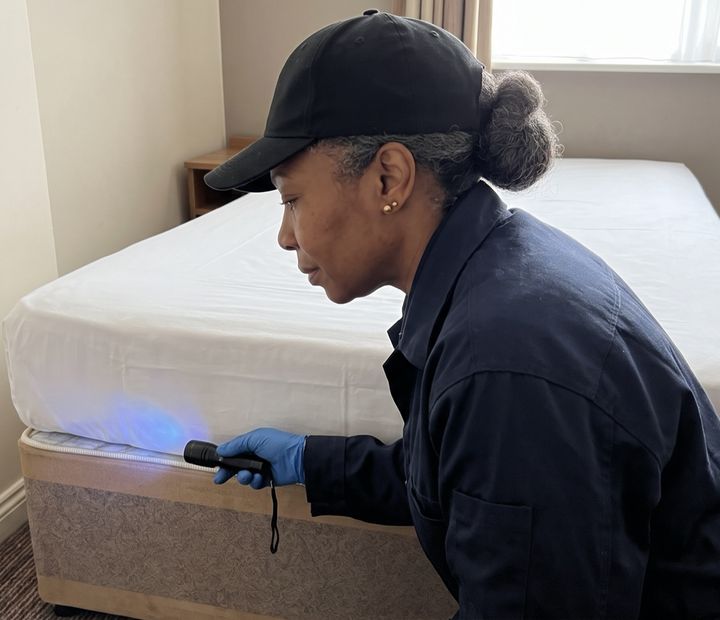
Northwest Environmental handles bed bugs in Liverpool student lets, HMOs, Duke Street's boutique hotels and terraced family homes. After identifying the insect and checking adjoining rooms, we treat beds and room edges and return two to three weeks later for bugs hatched since, on dates set from our Warrington base. Phone or send an enquiry to arrange an inspection.
Where do Liverpool’s bed bugs come from?
Bed bugs travel in belongings, and a great many belongings change address in Liverpool at the start of each academic year. The University of Liverpool and Liverpool John Moores University teach more than 55,000 students between them, and every September beds, mattresses, desks and suitcases are carried between shared houses, flats and family homes. A single bug carried in on a holdall or a second-hand bed frame can establish itself in one room and reach the next within weeks.
Visitors add to it. In 2022 Liverpool ranked fifth among UK cities for overseas visitors, cruise voyages begin and end at the Pier Head terminal, and Duke Street in the Ropewalks has boutique hotels among its food and drink venues. A room let night after night can be cleaned to a high standard and still pick up bed bugs from the next guest’s bag, so for a hotel the checks made at each changeover matter as much as the cleaning.
What do we find in Liverpool’s rented rooms and flats?
Council figures from 2021 put private renting at around a third of the city’s homes, with some wards nearer half. Where a house is let room by room, each tenant sleeps, studies and stores belongings in one room, and the lounge sofa often stands in as a spare bed for visitors. In that setting bed bugs rarely stay where they started. They move along pipe runs, behind skirting boards and through the voids between floors, so the tenant reporting bites is not always the one whose room is the source.
Flats raise the same problem in every direction. When Liverpool’s council tower blocks were balloted in the 1990s, 13 of the 71 were kept and refurbished while 54 were later demolished, and in high-rise and converted flats alike we expect to look at the rooms either side and, with the occupiers’ agreement, the flats above and below. Sofas, divan bases and stacked mattresses in shared lounges are checked as closely as the beds, because that is where visitors sleep and where bugs are easily missed.
Because the council’s domestic service does not cover bed bugs, shared houses or HMOs, these jobs are booked privately, usually by the landlord or letting agent. We send the findings to whoever booked us and, where a landlord asks, to the tenants as well.
How does a bed bug job run in Liverpool?
The method matches the one we use across the region. We confirm that the insect is a bed bug, check every bed, sofa and chair used for resting, and look at adjoining rooms. Preparation notes arrive before treatment day; we then treat mattress seams, frames, headboards, skirting and voids with whatever combination each room needs, and come back two to three weeks later for bugs that have hatched since. A final inspection and a written record close the job.
What changes in Liverpool is the planning around it. A first visit that lands in the middle of a student move-in is harder to prepare for, so where timing is flexible we book it just before tenants arrive or once rooms have settled. Letting agents with several houses on neighbouring streets can have them inspected in a single round from our Warrington base, and hotels can take affected rooms out of use as a planned block rather than one at a time.
How can Liverpool landlords and hotels keep bed bugs out?
Check any used bed frame, mattress or sofa thoroughly before it goes into a let, and look again at frames and mattress seams between tenancies, while rooms are empty and easy to check. Encasements on mattresses in rooms that have had bed bugs before make any return easier to spot. Ask tenants to report bites or spotting straight away and make it clear they will not be blamed for doing so, because late reports are what turn one infested room into a whole infested house.
If a mattress has to go, bag it before it leaves the room and arrange a collection rather than leaving it in the alley or beside a communal bin station, where it can pass bugs to whoever takes it home. For Duke Street’s hotels and any guest rooms let every night, staff who know to run a torch along headboards and divan bases at each changeover are the simplest early warning there is.
Bed Bug Control in Liverpool: what we see locally
- The University of Liverpool and Liverpool John Moores University teach more than 55,000 students between them, so each autumn move-in carries furniture and luggage, some of it second-hand, into shared houses across the city.
- On the council's 2021 figures about a third of Liverpool homes were privately rented, nearing half in some wards, and where rooms are let individually bed bugs often reach the next bedroom before anyone reports them.
- Liverpool City Council's domestic pest service covers ants, mice, rats and wasps and is not for shared houses or HMOs, so bed bug treatment in the city is arranged privately by the occupier, landlord or agent.
- Only four UK cities drew more overseas tourists than Liverpool in 2022, cruises start and finish at the Pier Head and Duke Street has boutique hotels, so guest rooms see a steady flow of luggage from elsewhere.
- Of the 71 council tower blocks balloted in the 1990s, 13 were kept and refurbished; in high-rise and converted flats alike, we expect to inspect the rooms either side, above and below as part of the job.
How we deal with it
- 1
Confirming it is bed bugs
We make sure the insect is a bed bug and not a bat bug, bird mite or carpet beetle larva, then check each bed, sofa and chair where people rest, plus adjoining rooms in shared buildings.
- 2
Your preparation checklist
You get written instructions on laundering bedding and clothes, clearing space around the bed, bagging belongings and what to leave where it is, so treatment can reach every hiding place.
- 3
Treating beds and room edges
Mattress seams, bed frames, headboards, skirting boards, carpet edges and voids are treated with targeted insecticide, dusts and steam as each room needs. If heat would suit the property better, we explain why.
- 4
Return visit for hatched eggs
Two to three weeks later we treat again, killing young bugs that have hatched since the first visit before they are old enough to breed.
- 5
Final inspection and written record
We look for live bugs and fresh spotting, suggest encasements or monitors where useful, and leave a written record of the rooms inspected, treated and cleared.
Bed Bug Control in Liverpool: frequently asked questions
Will Liverpool City Council treat bed bugs?
No. The council's domestic pest service covers ants, mice, rats and wasps, and bed bugs are not among them. That service is also not for shared houses, HMOs or communal areas, and people living in them are asked to take it up with their landlord instead. Bed bug treatment in Liverpool is therefore arranged privately, by the householder, the landlord or agent, or the business concerned. We can take the booking from whoever is responsible and send our findings to them in writing.
I have just moved into a student house and woken up with bites. What should I do first?
Gather evidence before throwing anything away. Look along the mattress seams, bed-frame joints and headboard for dark spotting, pale cast skins or live bugs, and photograph whatever you find. Email your landlord or agent with the photographs, the date you first noticed bites and which rooms are affected, and ask whether housemates have noticed bites too. Avoid carrying bedding or furniture through the house in the meantime. An inspection will confirm whether it is bed bugs and whether other bedrooms or the shared lounge are involved.
Can you inspect several properties for one letting agent on the same visit?
Yes, and with private renting approaching half of all homes in some Liverpool wards, agents often manage several lets close together. Those houses or flats can be inspected in one planned round from our Warrington base, starting with the property where bites were reported and moving on to any that share a wall with it or recently took furniture from it. Each address gets its own written report, so you can see exactly which properties need treatment and which were clear.
When is the best time to treat a student house?
As soon as bed bugs are confirmed, but the academic calendar can make the job easier. A house that is mostly empty over the summer can be cleared, treated and checked without disrupting anyone. During the September and October move-in, belongings are already in boxes and bags, which helps if they stay sealed until the room has been treated. Whatever the timing, every bedroom and the shared lounge should be inspected, because the room where bites were first noticed is not always where the bugs started.
Can anything kill 100% of bed bugs?
Nothing sold in a shop can promise that, and any product sold on that claim is worth doubting. Many bed bug populations now resist common insecticides, and eggs often survive treatments that kill adults. Heat kills every stage provided the whole room and everything in it reaches a lethal temperature, but it leaves nothing behind to stop bugs coming back from next door. A residual insecticide goes on working for weeks yet still needs a return visit for the eggs. What clears an infestation in practice is a careful inspection, the right combination of methods and a follow-up treatment.
Should I move to the sofa or spare room until the bed bugs are gone?
Generally, no. Bed bugs track people by body heat and the carbon dioxide in their breath, so when someone switches rooms the bugs tend to follow, and two rooms become infested rather than one. It is usually better to stay in your own bed, on freshly laundered sheets, with the frame a few centimetres from the wall and the bedding kept off the floor. Once the room has been treated, this also means bugs coming out to feed must cross treated surfaces. If anyone reacts badly to the bites, a pharmacist or GP can advise.
Is an overnight fix for bed bugs realistic?
Not usually. An insecticide treatment begins killing active bugs within hours, but eggs laid before the visit can go on hatching for about a week afterwards, and that is why a second treatment two to three weeks later is standard practice. Heat can kill every life stage in a room in a single day, although that room still needs checking afterwards and the rooms around it should be inspected. If an infestation has been building for months, be cautious of anyone who promises it will be gone after one overnight visit.
More in Liverpool
Last updated: