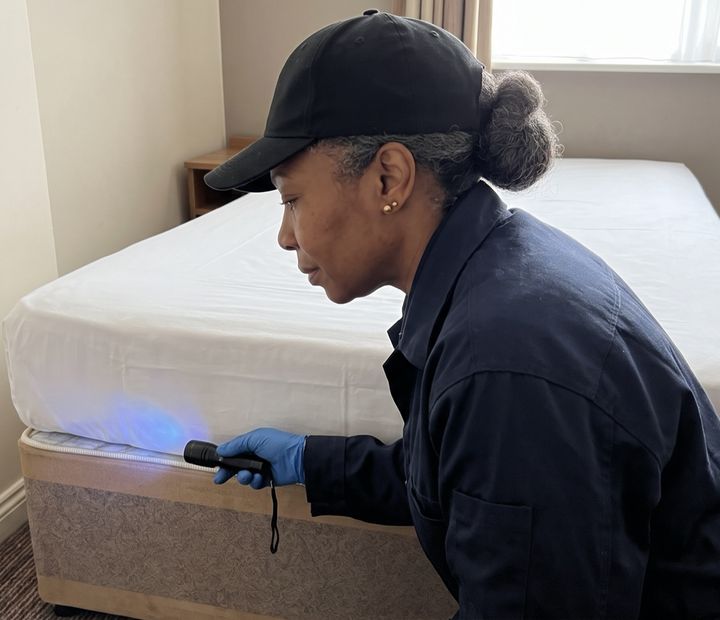
In St Helens, Northwest Environmental deals with bed bugs in houses, flats and workplaces, including Parr, Thatto Heath and the town-centre apartment blocks. We confirm the insect, send written preparation notes, then treat twice, two to three weeks apart, so hatched eggs are caught. Ring the office or send an online enquiry to arrange an inspection.
How do bed bugs reach St Helens?
Bed bugs travel with people, and St Helens is a well-connected town. St Helens Central sits on the Liverpool–Wigan line, the Liverpool and Manchester Railway passes through St Helens Junction, and the borough has M6 junction 23 at Haydock and M62 junction 7 at Rainhill Stoops. Holiday cases, work bags, nights away and a second-hand bed frame or settee are the usual ways in. None of this has anything to do with how clean a home is; the bugs need only a sleeping person within reach.
Work is another route. Distribution centres such as those north of the A580 and at Florida Farm typically run shifts, with staff sharing lockers, canteens and rest rooms, and a bug carried in on one person’s coat can end up in a staff area and then travel home with someone else. Spotting that early, and acting on it, stops a workplace becoming the link between several households.
What do we find in St Helens homes?
The housing decides how far an infestation spreads. In Parr’s terraces, built from the 1890s onwards, and in the post-war estates there and in Haydock, homes share walls and sometimes roof spaces, and bugs can move through the gaps behind skirting boards and along pipe runs into the house next door. In the modern apartment blocks put up during the town centre’s earlier redevelopment, shared risers and corridors do the same between flats, and Phase 1A will add townhouses to the centre.
Inside a home, most bugs are found close to where someone sleeps: mattress seams, divan bases, headboards fixed to the wall and the sofa of anyone who dozes there in the evening. Bedrooms crowded with stored boxes take longer to treat, because every box is another hiding place.
Council or private: what is the difference in St Helens?
Many councils run a pest control service for residents, but what is covered, who can book and the charges all vary and can change, so check the council’s own pest control pages before you book. If you rent, report the problem to your landlord first. If you would rather book a private firm, call or message us to arrange a visit.
How is a St Helens infestation treated?
Before booking, send us a close-up photo or a bug sealed in a clear bag, which is often enough to tell a bed bug from a carpet beetle larva or a bat bug. On the first visit we inspect beds, seating and room edges, map how far the bugs have spread and leave preparation notes covering laundry, bagging and clearing access to the skirting.
Treatment goes into seams, joints, skirting, carpet edges and voids, with a residual insecticide, insecticidal dust or steam chosen room by room, or heat where that suits the property better. The second treatment comes two to three weeks later, timed to catch bugs hatching from eggs laid before the first visit, and the job finishes with an inspection and a written report.
What should landlords and employers in St Helens do?
For a let property in Parr, Thatto Heath or elsewhere in the borough, inspect between tenancies and before new furniture goes in, and keep a dated note of what you checked. Where homes are attached, ask whether the neighbours will allow an inspection before treatment starts. Housing providers managing whole estates usually find that treating the affected home and checking its attached neighbours on the same day saves repeat visits later.
Employers with shared staff areas, including the warehouses and trading estates around Haydock, should log any report with the date and location, bag the item or garment involved and have the area inspected before deciding what to treat.
How can St Helens households keep bed bugs out?
Check second-hand beds, sofas and headboards on the doorstep, with a torch along every seam and joint, before they come indoors. After a trip, unpack on a hard floor rather than the bed and put clothes straight into a hot wash. Never drag an infested mattress down a shared stairwell without wrapping it first. After a previous infestation, zip mattresses into encasements, and report bites early, because a problem caught in one bedroom is far quicker to clear than one that has reached the house next door.
Bed Bug Control in St Helens: what we see locally
- Parr's terraces from the 1890s onwards and its 1950s and 1960s estates put many homes wall to wall, and bed bugs can cross through shared voids and gaps behind skirting into the house next door.
- Modern apartment blocks from earlier town-centre redevelopment share service risers and corridors, so one infested flat calls for checks above, below and to either side.
- With St Helens Central on the Liverpool–Wigan line, the Liverpool and Manchester Railway running past St Helens Junction and the motorway at M6 junction 23 and M62 junction 7, luggage and work bags move in and out of the town every day, and that is how bed bugs usually arrive.
- Distribution work in Haydock typically means shifts, shared lockers and shared rest rooms, so one bug brought in on a coat or bag is worth an inspection before it travels home with someone else.
How we deal with it
- 1
Confirming it is bed bugs
We make sure the insect is a bed bug and not a bat bug, bird mite or carpet beetle larva, then check each bed, sofa and chair where people rest, plus adjoining rooms in shared buildings.
- 2
Your preparation checklist
You get written instructions on laundering bedding and clothes, clearing space around the bed, bagging belongings and what to leave where it is, so treatment can reach every hiding place.
- 3
Treating beds and room edges
Mattress seams, bed frames, headboards, skirting boards, carpet edges and voids are treated with targeted insecticide, dusts and steam as each room needs. If heat would suit the property better, we explain why.
- 4
Return visit for hatched eggs
Two to three weeks later we treat again, killing young bugs that have hatched since the first visit before they are old enough to breed.
- 5
Final inspection and written record
We look for live bugs and fresh spotting, suggest encasements or monitors where useful, and leave a written record of the rooms inspected, treated and cleared.
Bed Bug Control in St Helens: frequently asked questions
Can I get St Helens Borough Council to treat bed bugs instead?
Many councils run a pest control service for residents, but what is covered, who can book and the charges all vary and can change, so check the council's own pest control pages before you book. If you rent, report the problem to your landlord first. If you would rather book a private firm, call or message us to arrange a visit.
How can I get an insect identified before booking a visit?
Seal it in a small clear bag or stick it to clear tape, or take a sharp close-up photo beside a coin for scale, and send it to us. Adult bed bugs are flat, oval and reddish-brown, roughly the size of an apple pip. Carpet beetle larvae are hairy and banded, and bat bugs are near-identical to bed bugs but carry longer fringe hairs behind the head. Check St Helens Borough Council's website for current pest control services and charges.
We let a house in Parr. What should we check between tenants?
Strip the beds and look along mattress seams, piping and the base of any divan, then check headboards, bedside furniture, skirting boards and sofa joints with a torch. Dark spotting, pale shed skins and tiny eggs in cracks are the signs to look for. If you find anything, have it confirmed before the next tenant moves in, and where the house shares a wall with the next one, ask whether the neighbours have noticed bites. We can carry out a void inspection and give you a dated written record before the new tenancy begins.
A bed bug was found in the staff room at our Haydock warehouse. What now?
Bag the item it was found on, note the date and exact spot, and ask staff not to move belongings between areas until it has been inspected. A bug in a staff room has usually been carried in on a bag or coat, so the source is more often someone's home than the building, and closing the site is rarely needed. We inspect lockers, seating and rest areas, treat where we find evidence and write up the visit for your records. A short briefing for staff on what to look for helps catch any repeat early.
Can anything kill 100% of bed bugs?
Nothing sold in a shop can promise that, and any product sold on that claim is worth doubting. Many bed bug populations now resist common insecticides, and eggs often survive treatments that kill adults. Heat kills every stage provided the whole room and everything in it reaches a lethal temperature, but it leaves nothing behind to stop bugs coming back from next door. A residual insecticide goes on working for weeks yet still needs a return visit for the eggs. What clears an infestation in practice is a careful inspection, the right combination of methods and a follow-up treatment.
Should I move to the sofa or spare room until the bed bugs are gone?
Generally, no. Bed bugs track people by body heat and the carbon dioxide in their breath, so when someone switches rooms the bugs tend to follow, and two rooms become infested rather than one. It is usually better to stay in your own bed, on freshly laundered sheets, with the frame a few centimetres from the wall and the bedding kept off the floor. Once the room has been treated, this also means bugs coming out to feed must cross treated surfaces. If anyone reacts badly to the bites, a pharmacist or GP can advise.
Is an overnight fix for bed bugs realistic?
Not usually. An insecticide treatment begins killing active bugs within hours, but eggs laid before the visit can go on hatching for about a week afterwards, and that is why a second treatment two to three weeks later is standard practice. Heat can kill every life stage in a room in a single day, although that room still needs checking afterwards and the rooms around it should be inspected. If an infestation has been building for months, be cautious of anyone who promises it will be gone after one overnight visit.
More in St Helens
Last updated: