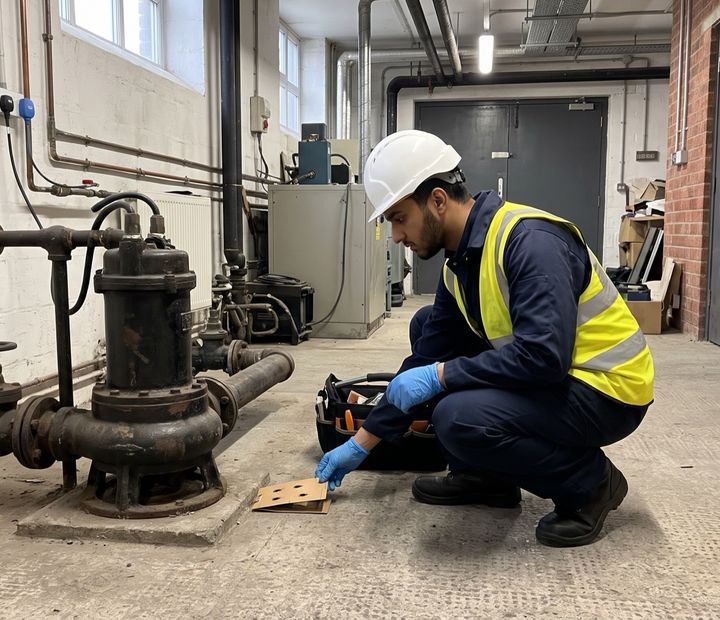
Northwest Environmental clears cockroaches from Liverpool homes and premises, from Ropewalks and Baltic Triangle kitchens to high-rise flats and older terraces in the north and east of the city. We identify the species, bait the hiding places and return over several weeks until monitoring traps show no further activity. Call or send the enquiry form to book a survey.
Which cockroaches turn up in Liverpool, and where?
Two species cause nearly all cockroach problems in British buildings, and the kind of building usually tells us which to expect. The German cockroach is small and light brown and needs steady warmth, so it lives indoors around kitchens, appliances and heating. In Liverpool that points to the commercial kitchens, bars and cafés of the city centre, and to flats with shared heating and service risers.
The oriental cockroach is larger, glossy and almost black, and prefers cooler, damp spaces at floor level: drains, ducts and the voids beneath older ground floors. Terraced housing still dominates the north and east of the city, and older terraced houses often sit over suspended floors and old drainage, which suit this species well. A householder who finds a large dark cockroach in the bath in the morning is far more likely to be dealing with drains and floor voids than with anything brought in from outside.
Why do the Ropewalks and the Baltic Triangle need joined-up treatment?
Both districts put food, drink and housing close together. Independent cafés, restaurants and late-night venues give the Ropewalks its character, and Wolstenholme Square, rebuilt after its clubs were demolished in 2016, now pairs residential blocks with commercial units. The Baltic Triangle had more than 500 businesses in 2020, with independent markets, gig venues and places to eat and drink such as Camp and Furnace and Cains Brewery Village, and new flats for students and young professionals sit among them.
In buildings like these, German cockroaches move between units through shared extract runs, service voids, drainage and party walls. Treating one kitchen while the bar next door or the flats upstairs stay untreated tends to buy only a few quiet weeks. Where we can, we ask the landlord or managing agent to arrange inspection of neighbouring units at the same time, and our report names any unit we were unable to reach, which protects the business that did act.
What if you rent, or live in a block of flats?
Cockroaches are not among the four pests Liverpool City Council’s domestic service treats, and shared houses, HMOs and communal areas fall outside that service in any case. Households therefore arrange cockroach treatment privately or through their landlord. The council’s separate commercial service, aimed at landlords, businesses and schools, quotes after a survey, so a landlord thinking of using it should first ask which pests it handles.
In tower blocks and other purpose-built flats, cockroaches travel between floors along heating pipes and risers, and a flat-by-flat approach seldom holds for long. We work with housing providers and managing agents to inspect and treat by stack or by block, and we keep each tenant informed about what to clear and what to leave alone before the visit.
How does a cockroach job run in Liverpool?
We start with species and spread: a torch inspection, monitoring traps, and questions about neighbouring units, risers and drains. Gel bait is placed in crevices, door hinges, appliance motor housings and behind kitchen units, with an insect growth regulator or a residual product in voids and drains where the species and the site call for it. Follow-up visits read the monitors and re-treat active spots over roughly four to eight weeks, and often longer for oriental cockroaches living in old drainage.
City-centre kitchens and bars that trade late are visited in the morning, before deliveries and prep begin. We plan the whole course from our Warrington base at the outset, so each follow-up is in the diary before the first treatment goes down. Every visit produces a written report to file with your food safety records, ready for an environmental health officer to read.
How do you keep cockroaches out after treatment?
Cockroaches that return after a treatment usually come from one of three places: harbourage left in a neighbouring unit, gaps that were never sealed, or new stock. Seal around pipes and cable entries where they pass through party walls and floors, keep drains trapped and gullies capped, and break down cardboard outers as soon as stock is unpacked. At home, fix leaks under sinks, keep food sealed, and make sure rubbish goes into the bin or the communal station with the lid shut rather than piled beside it.
Leave monitoring traps in place after treatment in kitchens, plant rooms and bin stores, so a new arrival shows up while it is still a handful of insects rather than an established population.
Cockroach Treatment in Liverpool: what we see locally
- Across the Ropewalks, independent cafés, restaurants and bars trade close together, and where kitchens share walls, ducts or service voids, German cockroaches can pass from one business to the next.
- The Baltic Triangle mixes food and drink venues and markets with new homes for students and young professionals, so a problem in one commercial kitchen can become a problem for the flats nearby.
- Terraced streets still make up much of north and east Liverpool, and older houses with suspended ground floors and ageing drains suit the larger oriental cockroach, which prefers cool, damp voids.
- Cockroaches are not on Liverpool City Council's domestic treatment list, which stops at ants, mice, rats and wasps, so households and landlords book cockroach work privately.
- Speke combines the airport, business parks and a shopping park, and goods arriving in cardboard outers or on pallets are a common way for German cockroaches to reach a warehouse or retail unit.
How we deal with it
- 1
Inspection and species check
We confirm whether it is German or oriental cockroaches, set monitoring traps and trace the harbourages, the routes between them and any spread into neighbouring flats, units or shared voids.
- 2
Preparation advice
You are told what to clear, cover or move before treatment, and what to leave alone so the bait stays attractive and is not washed or sprayed away.
- 3
Targeted treatment
Professional gel baits go into cracks, hinges and appliance voids, with an insect growth regulator and residual products in voids, drains and ducts where the species and site call for them.
- 4
Follow-up visits
We return as egg cases hatch, read the monitors, re-treat the active spots and switch bait formulation if cockroaches stop feeding on it.
- 5
Proofing and written report
You receive a record of what was found, what was used and where, plus the proofing and housekeeping actions that close the gaps and stop cockroaches returning.
Cockroach Treatment in Liverpool: frequently asked questions
We share a building in the Baltic Triangle with other food businesses. Does everyone need treating?
Not necessarily everyone, but every connected unit should be inspected. German cockroaches use shared voids, extract ducts and drainage to move between tenants, so treating one kitchen often clears it only until insects cross back. The most effective route is for the landlord or managing agent to arrange inspection of all linked units, with treatment wherever activity is found. If a neighbour declines, we treat your unit, proof the shared gaps on your side and note in the report that the adjoining unit could not be checked.
Cockroaches keep reappearing in my high-rise flat. Why?
In a tower block, cockroaches travel between floors along heating pipes, service risers and the gaps where pipework passes through walls and floors, so clearing your own kitchen leaves the source elsewhere in the building untouched. Tell your landlord or housing provider in writing, with dates and photographs, and ask whether neighbours on the floors above and below have reported the same. A treatment planned across the affected flats, with follow-up visits for each, is far more likely to hold than repeated efforts in a single home.
Can cockroaches come in with deliveries to our Speke warehouse or shop?
Yes. German cockroaches and their egg cases travel in cardboard outers, on returned cages and pallets and inside second-hand catering equipment, so any warehouse, shop or food business taking regular deliveries can pick them up from goods coming in. Open and inspect stock at goods-in, turn away any consignment with live cockroaches or egg cases on it, and get cardboard out of storage areas quickly. Monitoring traps by goods-in and in staff rest areas will show an arrival early, and they can sit within a scheduled site contract.
We are taking on a refurbished unit in the Ropewalks. Should we have it checked before we open?
It is worth doing. A unit that has stood empty, or one sharing walls and ducts with busy kitchens and bars, can already hold cockroaches before your equipment arrives, and second-hand catering kit is a common way in. A pre-opening survey with monitoring traps shows whether there is activity, lets us treat while the kitchen is empty and easy to reach, and gives you a dated record that the premises were checked before trading began. We also list proofing gaps to close during the fit-out.
How can I tell a German cockroach from an oriental cockroach?
Size and colour are the quickest guide. German cockroaches are small, around 12 to 15 mm, light brown with two dark stripes behind the head, and turn up at worktop height around kitchens and appliances. Oriental cockroaches are larger, around 20 to 25 mm, dark brown to black and glossy, and are found at floor level in cellars, ground-floor voids and near drains. The species matters because they hide in different places and the plan differs. If you can, photograph one or keep it in a sealed jar for the technician.
Why have I got cockroaches when my kitchen is clean?
Cleanliness affects how quickly cockroaches multiply, not whether they arrive. German cockroaches are usually carried in with cardboard packaging, second-hand appliances, luggage or catering equipment, and in flats they travel through shared risers, heating pipes and service ducts from neighbouring homes. Oriental cockroaches come up from damp cellars, drains and the voids under older ground floors. Even a spotless kitchen has warmth, water and crumbs behind the fridge or under the dishwasher. Good housekeeping still helps, because with less competing food the bait becomes more attractive.
How long does it take to get rid of cockroaches?
Several weeks rather than a single visit, because neither bait nor spray reaches the eggs sealed inside an egg case. A typical German cockroach treatment runs over three visits across roughly four to eight weeks, with the follow-ups dealing with the young that hatch after the first treatment. Oriental cockroaches and large commercial sites can take longer. You should notice a clear drop in activity within the first couple of weeks, and we carry on until the monitoring traps stay empty on consecutive checks.
More in Liverpool
Last updated: